How to Safely Decommission a Web Domain

Turning off a web server is only one part of retiring a domain-related service. The same domain may be used for email, account recovery, APIs, certificate validation, redirects, and DNS records pointing to cloud resources. If those dependencies remain after a resource is deleted, users may lose access or a stale DNS record may point to an endpoint another party can claim.
To retire a domain safely, identify the services that use it, move or close those services, and remove references to resources before giving up control of them. Revoke access that is no longer needed, but retain the domain registration while other accounts or services still depend on the name. Closing a hosting account and releasing a registered domain are separate decisions.
Inventory Domain and Service Dependencies
List the registered domain, delegated name servers, active DNS zones, and every relevant record type. Identify website and API hostnames, CNAME targets, addresses, MX routing, TXT verification values, certificate-related records, and any subdomain delegations. For each hostname, record the responsible team, the service it reaches, and the account that controls that service. Include both public and internal documentation that refers to the name.
Look beyond DNS. Check authentication and account-recovery email addresses, OAuth redirect URIs, webhook targets, payment or support integrations, monitoring checks, mobile app endpoints, and links in other sites. A name used as a recovery mailbox or identity domain can remain security-sensitive even after its website disappears. Ask service owners to confirm whether traffic is still expected before marking a record unused.
Preserve the evidence needed to explain the change: current DNS answers, service inventory, traffic summaries, and approved ownership decisions. Do not share raw credentials or personal log data in the inventory. Define a cutover and rollback plan for any service moving to another hostname.
Remove Stale DNS before Releasing Resources
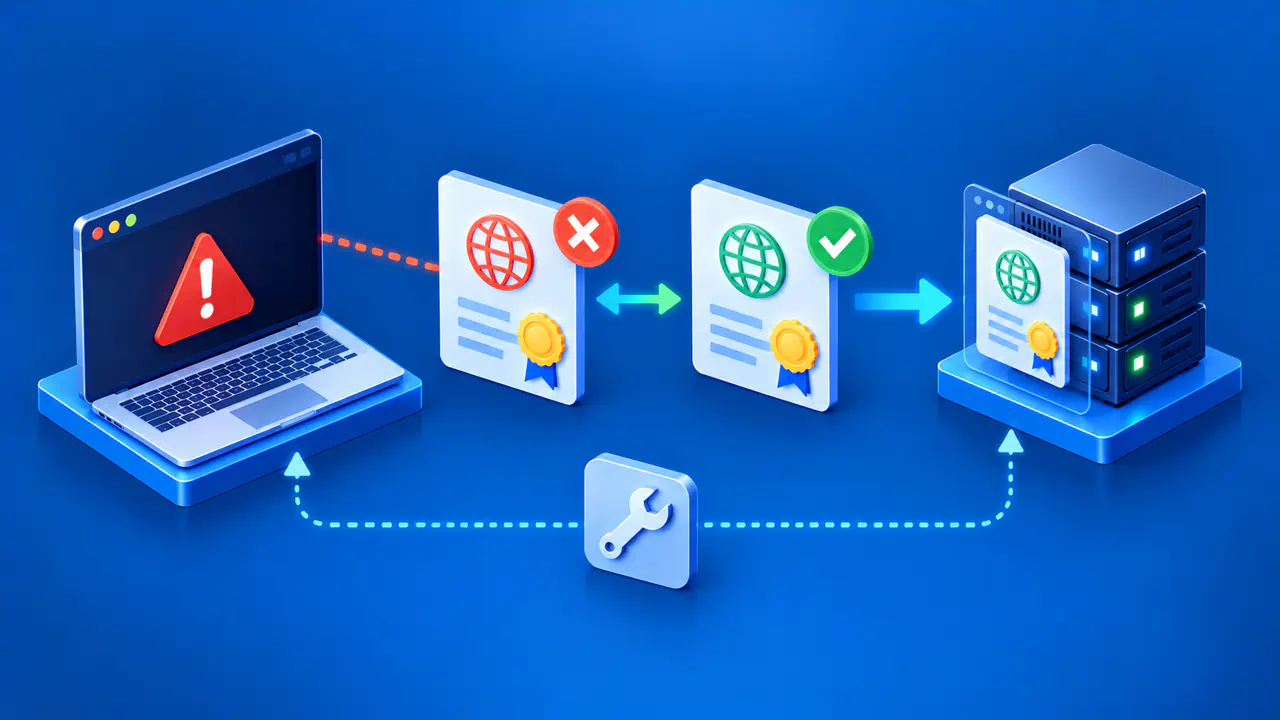
A dangling DNS record still directs requests toward a resource that has been deleted or is no longer controlled by the expected owner. If the hosting service lets another account claim that destination, the old hostname can lead visitors to content controlled by someone else. Remove unused DNS references or point them to a verified replacement before releasing the old resource.
Review CNAMEs, provider-specific alias records, A and AAAA addresses, and delegated subdomains. Check how the hosting or cloud provider handles a deleted resource and whether its name or address can be reassigned. A record that used to work may be unsafe after a cloud app, storage bucket, or hosting endpoint is released. Confirm any replacement target is active and owned by the right account. If traffic must continue, migrate it first and validate the new destination before removing the old one.
Account for Cached Records
A DNS update does not remove answers already stored in resolver caches. Keep the old destination under your control while cached records and known clients are still directing requests there. Where practical, lower TTL in advance of a controlled cutover, but do not assume a TTL change instantly clears existing caches. Query authoritative DNS and representative recursive resolvers after the change, then compare the answers with traffic reaching the old resource. A few successful lookups do not prove that every client has stopped using the old destination.
If a subdomain has its own DNS zone, remove or replace the delegation in the parent zone before deleting the old child zone. Allow for cached delegation records in the shutdown plan. Keep an authoritative DNS service under your control for any registered name you retain; deleting a zone without updating its delegation can leave queries directed to abandoned infrastructure.
Revoke Access and Retire Secrets
Once the replacement service works or the old function is intentionally retired, remove unneeded administrator access, API keys, service accounts, deployment credentials, and access grants. Review TLS certificates and validation arrangements associated with the name. A certificate's remaining validity does not mean the old endpoint should stay active, and removing a server does not automatically revoke every credential that could still be used elsewhere.
Coordinate revocation with dependencies. A key or account may be shared by another active service, so identify its owners before disabling it. Rotate secrets when exposure or reuse is suspected. Cancel external integrations only after their traffic has been accounted for. Keep an audit record of who approved the retirement and which controls were removed, without copying secret values into the record.
Keep Control of Names That Still Matter
Decide whether to retain the domain registration, transfer ownership, or eventually release the name. Separately, decide what should happen to requests for the old web pages. Retaining a domain may be necessary while old links, email addresses, recovery flows, or brand references remain in use.
If email is ending, update account recovery addresses and communication channels before closing the mail service. Set the intended mail behavior explicitly: simply deleting MX records can cause senders to try the domain's A or AAAA addresses instead. A domain that is released may later be registered by someone else, which changes the risk of messages or links still aimed at the old name.
There is no single waiting period that makes every domain safe to release. Base the decision on the remaining dependencies, the organization's retention policy, and any obligations that apply to its records. A web application may be gone while the domain must remain registered and monitored. Retaining a name without monitoring its DNS and account security can leave stale records unnoticed.
For pages that have moved, keep a working web endpoint that redirects requests to the relevant new URLs. Content removed without a replacement should return an appropriate not-found response. A redirect still needs hosting and DNS, even if the old application is gone, so include that small remaining service in the ownership and maintenance plan.
Verify and Document the Final State
Check the domain's authoritative DNS, website and API responses, mail flow if it remains active, redirects, and monitoring after the change. Confirm that no retired hostname resolves to a deprovisioned endpoint. Review logs for unexpected traffic to the old service and investigate before shutting off the last controlled fallback. Test critical account-recovery and integration paths that were migrated.
Document each hostname's final disposition, the resource it used, the DNS change, the owner who approved it, and the date of verification. Schedule a follow-up check because stale references can surface later in code, vendor settings, or external links. Assign responsibility for any retained registration, redirect service, and remaining DNS records so the next renewal or infrastructure change does not undo the cleanup.