
Articles
Browse all our articles to find answers to your questions about the internet, networks, browsers, security, privacy, and more. From everyday problems to more technical topics, our articles offer explanations and guidance for readers of all experience levels.
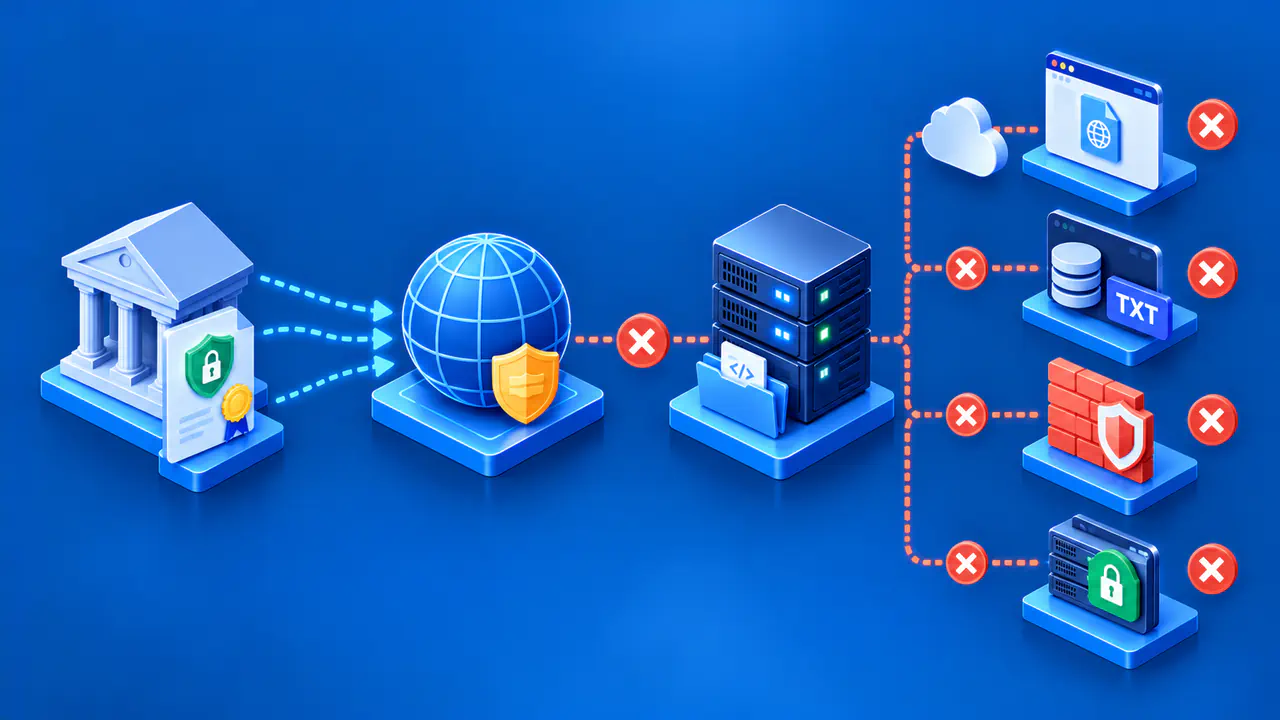
Why ACME Validation Fails behind a CDN
ACME validation behind a CDN can fail when DNS, challenge routing, caching, security rules, or TLS termination hide the required proof from the authority.

How ACME Certificate Validation Works
ACME validates control of each domain or IP identifier through supported challenges before a certificate authority issues a TLS certificate.

How to Create a CSR with OpenSSL
OpenSSL creates a CSR from a private key and the requested SAN names, and the request can be inspected before it is sent to a certificate authority.
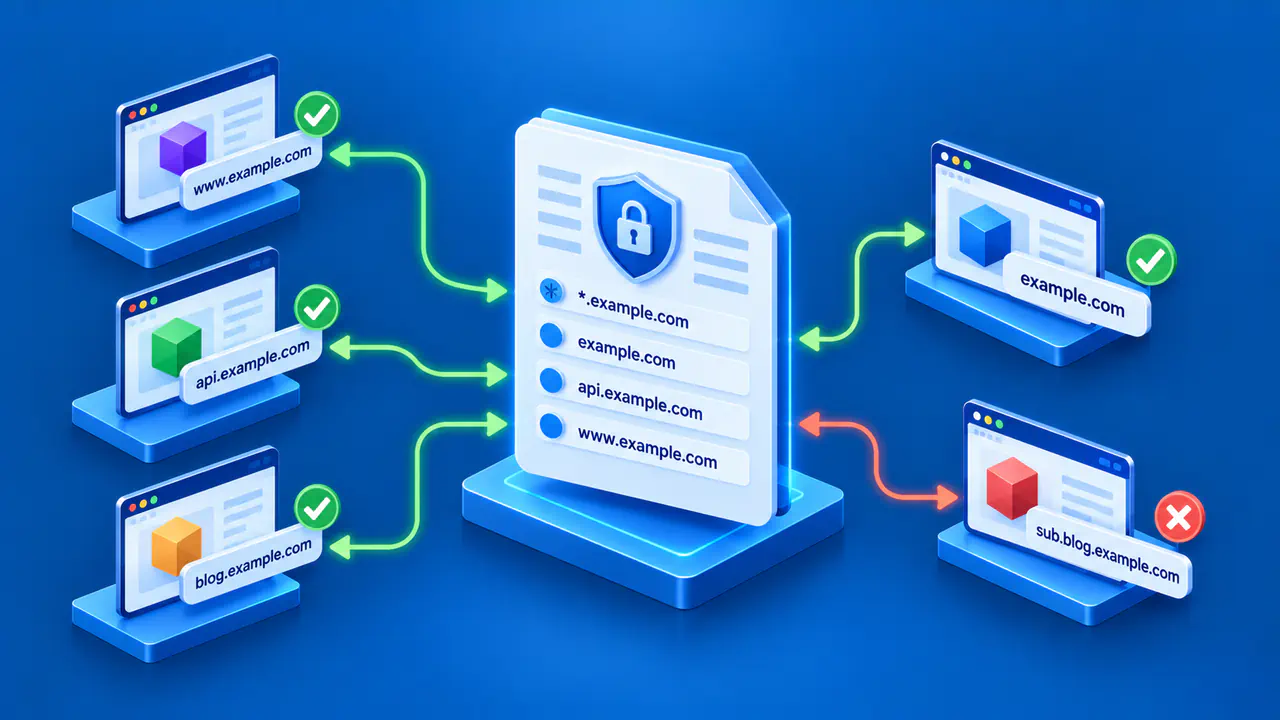
Wildcards and SANs in TLS Certificates
A TLS certificate's SAN lists the names it covers, and a wildcard matches one subdomain level while the parent domain requires its own exact entry.

DV vs OV vs EV Certificates Explained
DV checks domain control, OV adds verified organization details, and EV adds more extensive identity checks without changing TLS encryption by itself.

Can an IP Address Have a TLS Certificate?
A public IP address can have a publicly trusted TLS certificate when an issuer verifies control and lists the exact address as an IP entry in its SAN.

How Server Name Indication Works
Server Name Indication lets a TLS client name its intended host during the handshake so a shared endpoint can select a suitable certificate.

What Is a Virtual Host on a Web Server?
A virtual host is a web server configuration that assigns site settings to requests based on the destination address, port, or requested hostname.

Apache vs Nginx for Website Hosting
Apache supports optional .htaccess rules in website directories, while Nginx applies routing and access rules through its server configuration files.

What Is a Web Server?
A web server is software that receives HTTP requests and sends responses, either serving stored files or working with an application to produce content.

Choosing VPS CPU, RAM, and Storage
VPS capacity is chosen from measured CPU, memory, and storage demand, with room for busy periods and a recovery plan for later resource changes.

Managed VPS vs Unmanaged VPS Hosting
Managed VPS hosting assigns agreed server maintenance to the provider, while an unmanaged plan leaves operating system and software upkeep to the customer.

Shared Hosting vs VPS vs Cloud Hosting
Shared hosting puts sites on a managed platform, a VPS provides a virtual machine, and cloud hosting describes infrastructure that can include either.

What Is Web Hosting?
Web hosting is a service that provides the storage, computing resources, and network access needed to deliver a website's content to visitors online.

Why Premium Domains Cost More
Premium domains cost more when a registry sets higher rates for selected names or an existing owner asks a higher resale price for a registered name.

Parked Domains and Redirected Domains
A parked domain usually shows placeholder content at its own address, while an HTTP redirect sends a browser to another URL through a server response.

Apex Domain vs Subdomain Explained
A DNS zone apex is the top name of one authoritative zone, while a subdomain can lie within that zone or form the apex of a delegated child zone.

Subdomains and When to Use Them
A subdomain is a name beneath a parent domain in DNS, useful for services that need a separate hostname, hosting destination, or administrative control.

DNS Hosting vs Web Hosting
DNS hosting publishes domain records that direct connections, while web hosting stores website files and serves pages and application responses.

How to Find a Domain's Nameservers
A domain's name servers can be found with an NS query, then checked against the parent delegation and the authoritative zone if the answers differ.

How to Read Domain RDAP Records
Reading a domain RDAP record requires matching its name, interpreting event dates and statuses, and checking contact roles and redaction notices.

RDAP Lookup vs WHOIS Lookup Differences
RDAP returns structured registration data over HTTP with discovery and access controls, while WHOIS returns text in formats that vary by server.

WHOIS Privacy vs RDAP Redaction Explained
Privacy services supply alternate contact details, proxy services are the registered holders, and RDAP redaction hides fields in public lookup responses.

How to Update Domain Contact Information
Domain contact details can be changed in your registrar account, but some edits require approval and may trigger a 60-day lock on registrar transfers.