How ACME Certificate Validation Works
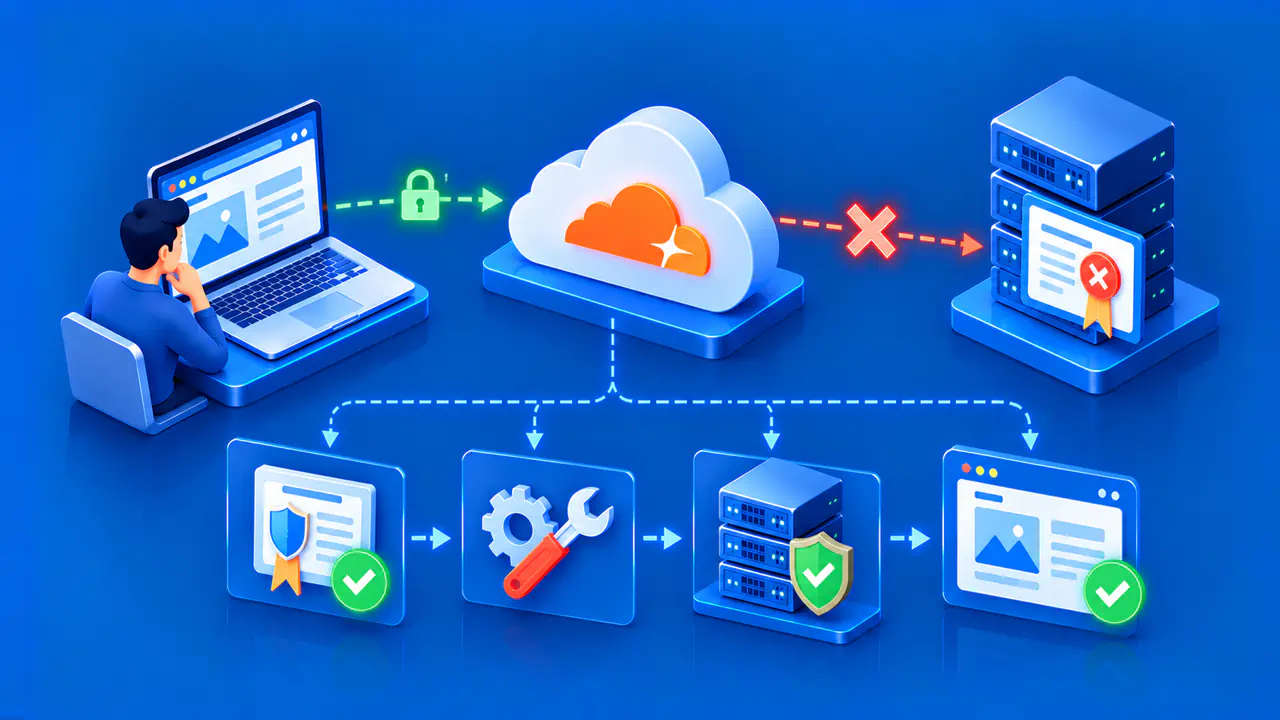
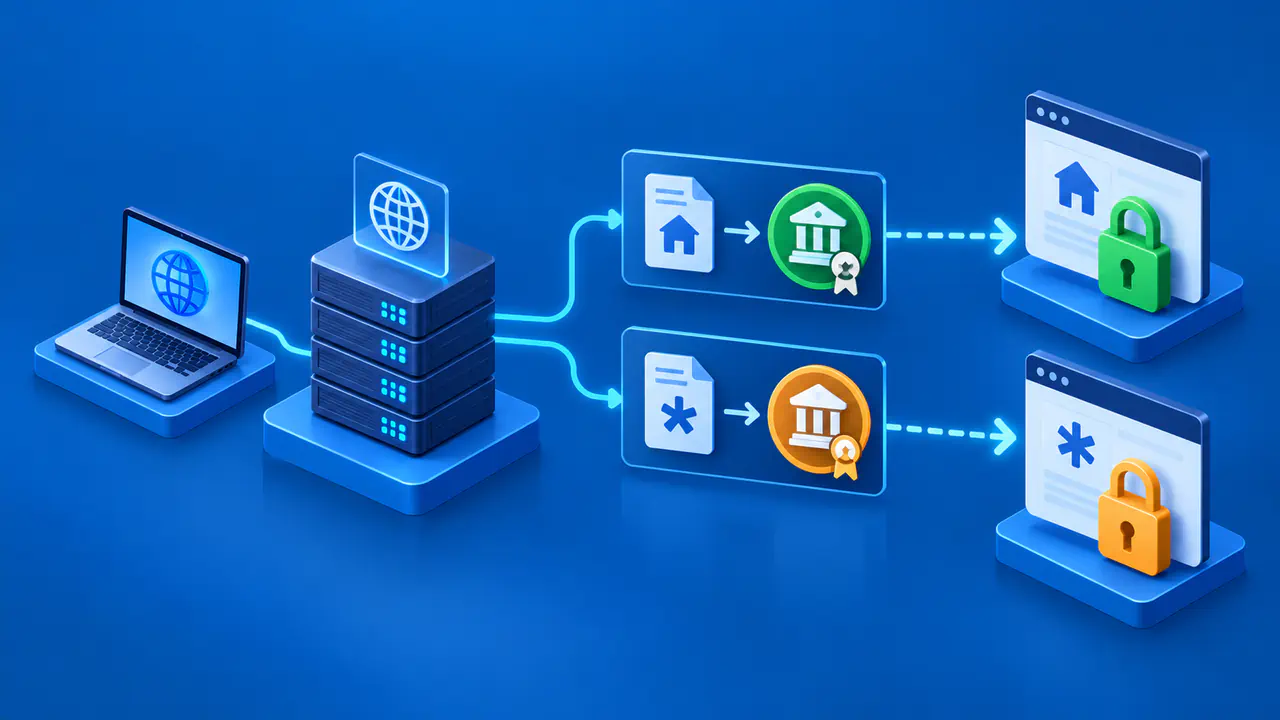
ACME, or Automatic Certificate Management Environment, automates requests and renewals for TLS certificates. A certificate authority, or CA, uses ACME challenges to check control of requested identifiers, such as domain names or IP addresses. Each challenge belongs to an authorization that records an account's permission to represent an identifier. A method suitable for an ordinary domain name may not work for a wildcard or IP address.
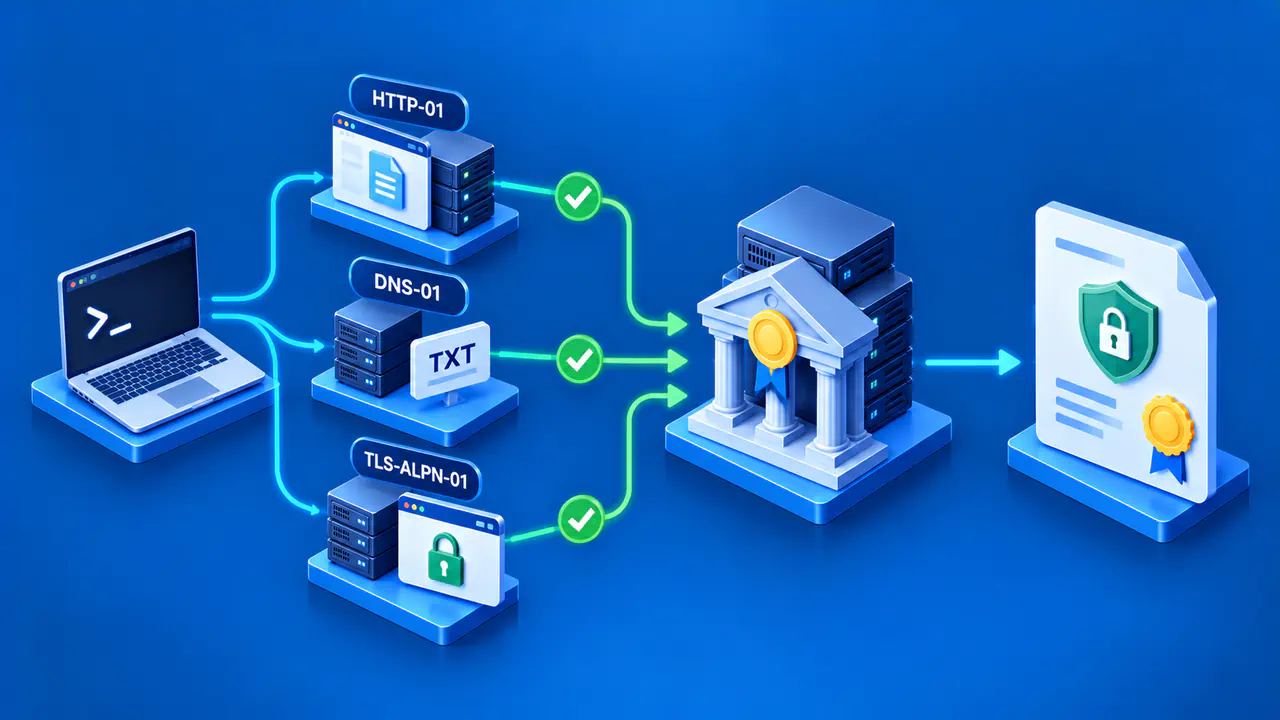
The practical choice is based on four things: the identifier on the certificate, the challenges offered by the CA, the features of the ACME client, and the network or DNS access available to the applicant. A publicly reachable web server, a managed DNS zone, and a server that can answer a special TLS handshake offer different ways to prove control. None is a universal replacement for the others.
How an ACME Account and Order Lead to Validation
An ACME client authenticates to a CA with an account key and submits an order listing the desired identifiers. The order supplies URLs for the relevant authorizations, which the client reads to find their current status and available challenges. For an authorization that needs validation, the client prepares a supported proof and notifies the CA that it is ready. After checking the proof, the CA marks the authorization valid or returns a validation error.
When every required authorization is valid and the order is ready, the client submits a certificate signing request, or CSR, to finalize it. The CA can then process issuance; the client waits for a valid order and downloads the certificate from the returned certificate URL. A successful challenge by itself is not a completed certificate order.
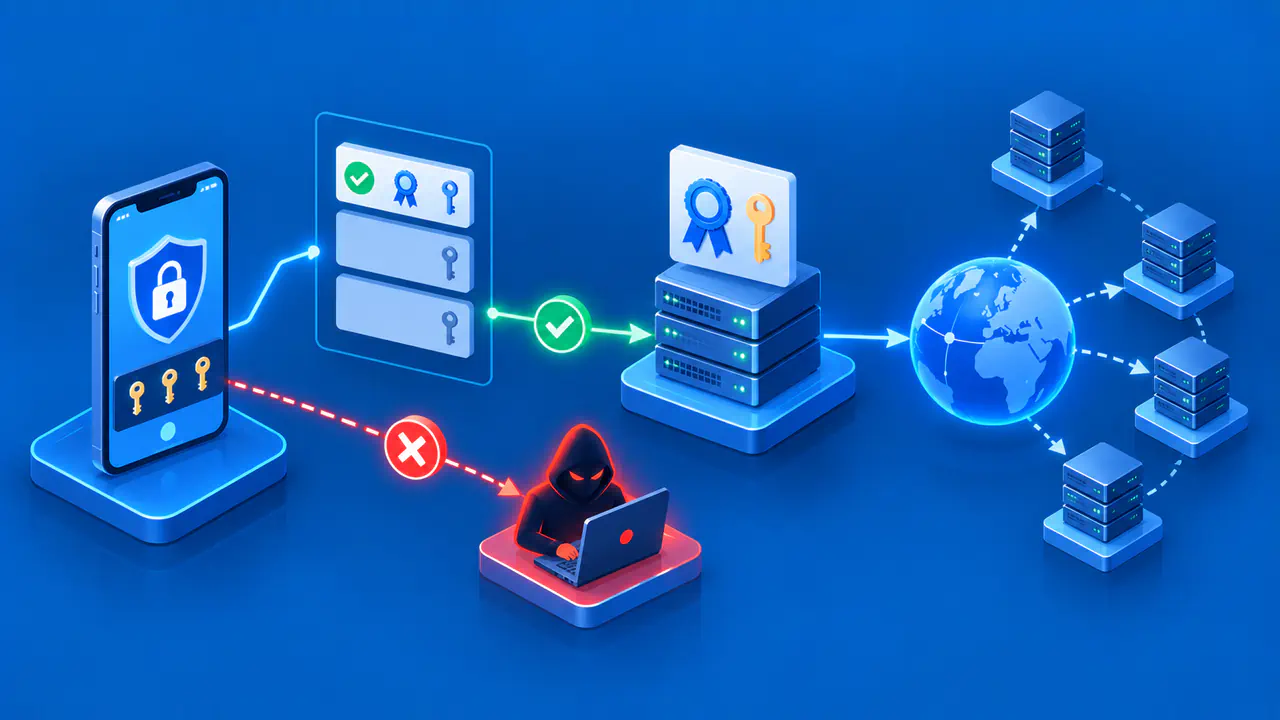
These authorization checks establish control of an identifier under the CA's policy; they do not establish an organization's identity or show that a site is safe. The ACME account key authenticates requests to the CA, while the certificate's private key serves the TLS endpoint. Keep both keys protected and track which account manages each certificate.
HTTP-01 Proves Control through a Web Path
For HTTP-01, the CA asks for a token response at a defined path under /.well-known/acme-challenge/ on the requested identifier. The client publishes a response derived from that token and its account public key's thumbprint. The CA then makes an HTTP request to check it. Let's Encrypt starts HTTP-01 validation on port 80. A firewall, wrong virtual host, broken routing rule, or content delivery configuration can prevent the CA from reaching the expected response even when the site works for its usual visitors.
HTTP-01 is convenient when the applicant controls the web endpoint and can expose the challenge path. It can be a poor fit when port 80 cannot be reached or many servers must all serve the same proof. Do not assume that a private test from one machine duplicates the CA's view of the network. Let's Encrypt supports IP address validation through HTTP-01, but it does not issue wildcard certificates through that challenge. Confirm that the selected CA and client support the requested identifier and challenge combination.
DNS-01 Proves Control through a TXT Record
For DNS-01, the client publishes a challenge value in a TXT record at a name such as _acme-challenge.example.com for example.com. The CA queries DNS for that value. This avoids exposing a web challenge path and allows validation when the application server is not directly reachable on the public internet. It also supports wildcard domain names under the policies of CAs that offer wildcard issuance. Let's Encrypt uses DNS-01 for wildcard names.
DNS-01 requires control of the relevant DNS data and enough time for the CA to see the intended record. For a public CA, the challenge TXT data must be visible through public DNS even if the application server is private. Automation often uses a DNS provider API, so protect its credentials and use the narrowest permissions the provider supports. Separate challenge zones can limit which DNS records the validation client may change. DNS-01 proves control of a domain name through DNS; it cannot validate a literal IP address.
TLS-ALPN-01 Uses a Special TLS Handshake
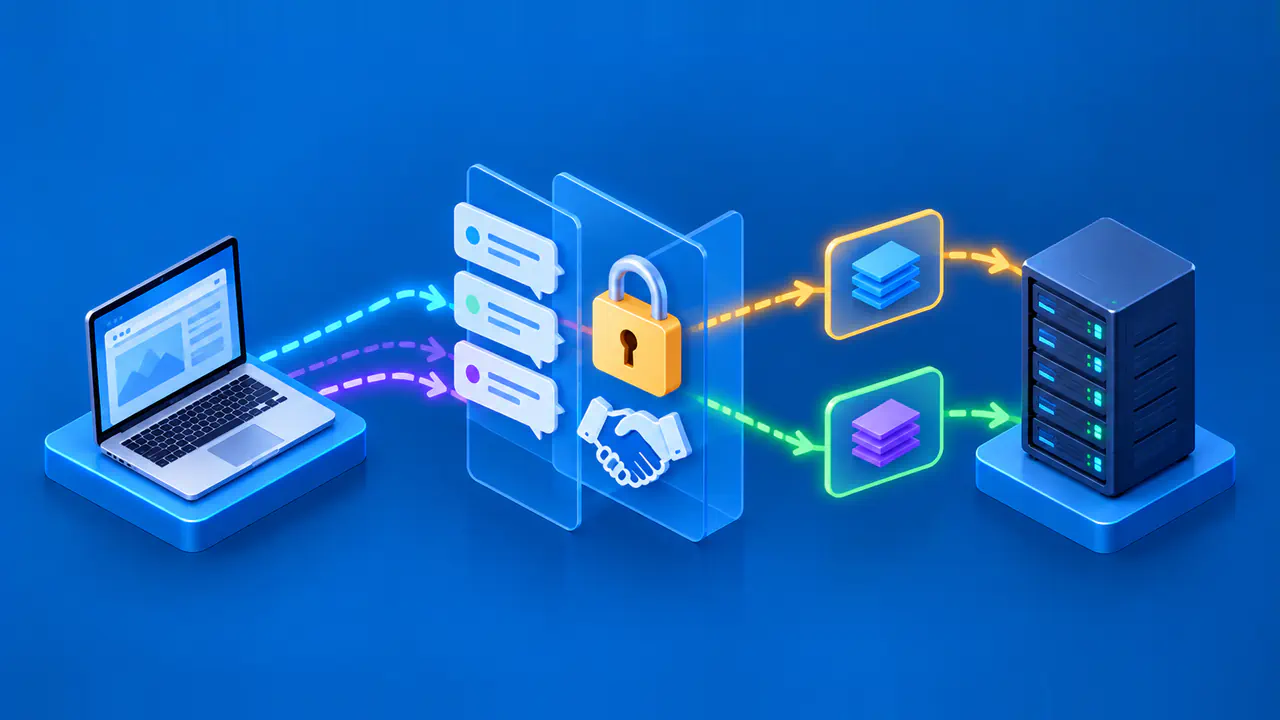
TLS-ALPN-01 validates control through a TLS connection on port 443 that negotiates the acme-tls/1 application protocol. The client configures a temporary validation certificate for that handshake. This can fit a server that controls its TLS endpoint but cannot serve an HTTP-01 path. A reverse proxy or load balancer must pass or handle the validation handshake correctly. A normal HTTPS response alone is not sufficient.
Let's Encrypt supports IP address validation through TLS-ALPN-01, but the challenge cannot validate wildcard names in that service. ACME client support for TLS-ALPN-01 is more limited than for common alternatives. Check whether the selected client can configure the TLS endpoint without interrupting the production certificate. An upstream TLS terminator can make an otherwise correct client response invisible to the CA.
Choose a Supported Challenge and Protect Credentials
Start with the identifiers: ordinary domain names, wildcard domain names, and IP literals have different validation paths. Then check the certificate authority's current challenge offerings and whether the client implements the chosen method for that identifier type. For HTTP-01, trace public port 80 and the exact challenge path through redirects, proxies, and every answering server. For DNS-01, confirm which DNS zone owns the TXT record and whether automated updates are tightly authorized. For TLS-ALPN-01, confirm public port 443 reaches a TLS endpoint that can present the temporary validation response.
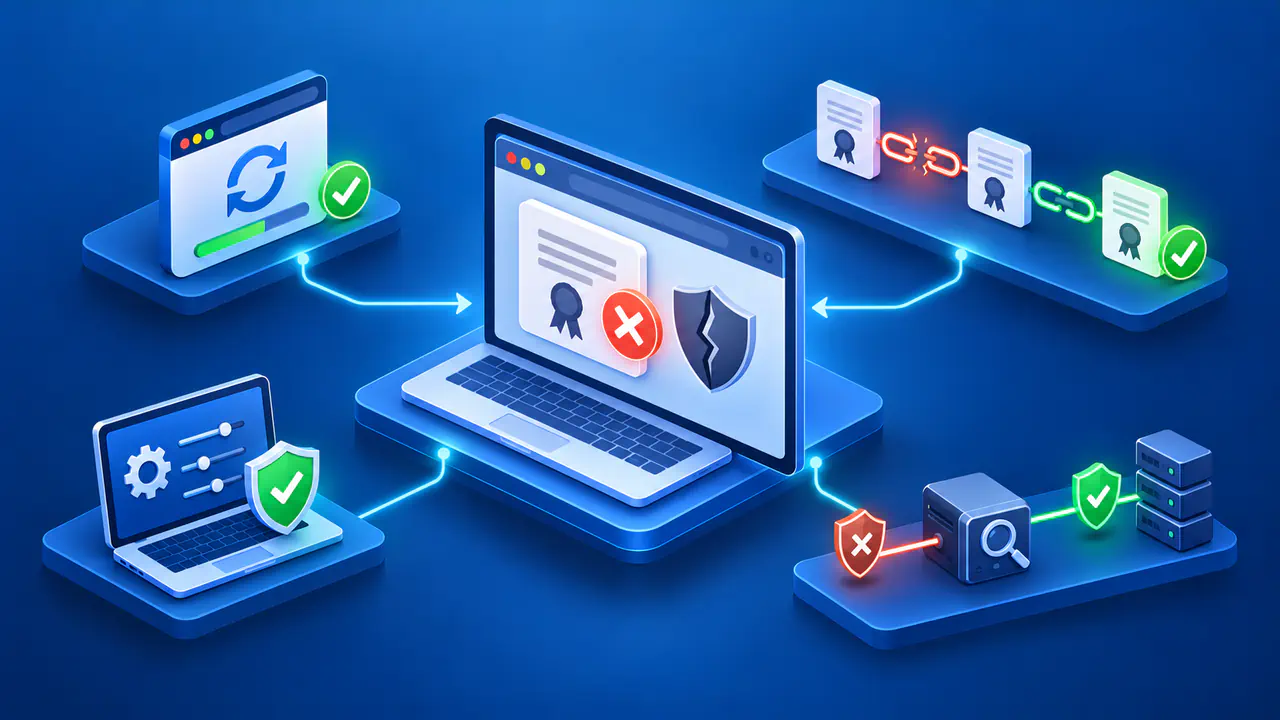
Protect ACME account keys and DNS API credentials, and restrict who can publish web or TLS challenge responses. After a failed attempt, inspect the CA's reported validation error and test the particular path or record it tried to read. Avoid switching challenges merely because one attempt failed: first identify whether the cause was incompatible identifier support, client capability, DNS visibility, or network reachability. Before an unattended renewal, confirm that the client can update the required proof without granting unnecessary access to other services.