BIND vs PowerDNS vs Knot DNS for Authoritative DNS
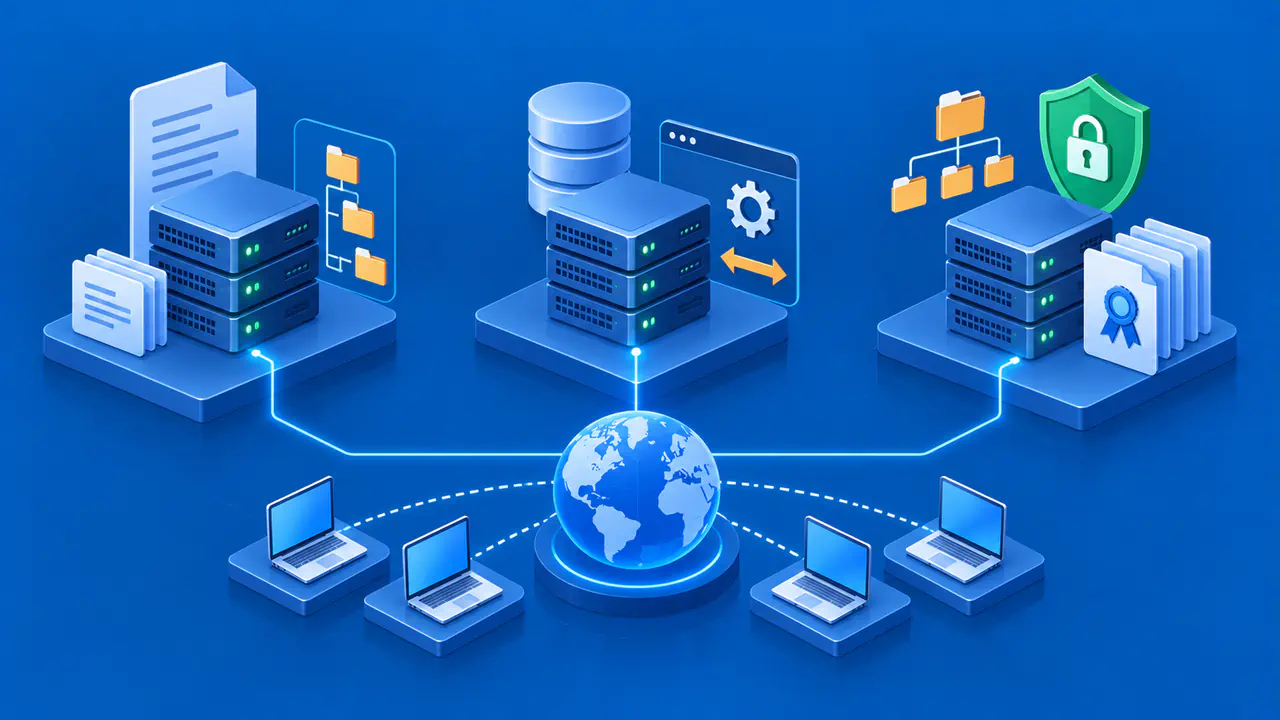
BIND, PowerDNS Authoritative Server, and Knot DNS can all publish authoritative DNS zones. The main differences are how each stores records, accepts changes, manages signing, and fits the systems your team already operates. A server that suits a file-based publishing process may be less convenient for a hosting platform that provisions records through an application programming interface (API).
Choose a server that fits the complete publishing service, including its source of records and recovery process. A feature list does not show whether a failed update can be corrected, a signing key can be recovered, or a secondary can obtain the intended zone. Those are operating requirements you can compare before selecting software.
Authoritative Servers and Separate Resolvers
PowerDNS Authoritative Server and Knot DNS publish DNS records for the zones they host. PowerDNS Recursor and Knot Resolver are separate products that look up DNS answers for clients. The resolver products do not replace their authoritative counterparts.
BIND can perform authoritative and recursive work, but a public authoritative deployment should have its recursion policy explicitly restricted. Its ability to perform both roles is not a reason to combine public zone publishing with client resolution. Knot DNS concentrates on authoritative service, while PowerDNS provides that role through its Authoritative Server.
Where Zone Records Are Stored
Decide where operators will maintain the zone's records: in zone files, in a database, or through a controller that uses a supported management interface. Keep that source distinct from the copies the server generates or distributes, so an update is not overwritten by an older copy.
BIND and File-Based Publishing
A conventional BIND deployment defines zones in named.conf and loads their records from zone files. This fits teams that already review file changes and distribute configuration through their deployment system. BIND's configuration and zone checking tools can reject syntax errors before the service loads a change.
Dynamic updates change the editing model. An update accepted by the running server may be recorded in a journal before the corresponding zone file is synchronized. Treating that file as an independently editable source can conflict with the server's current data. Choose either a controlled file publishing process or a coordinated dynamic update process for the records concerned.
PowerDNS Backends
PowerDNS separates the authoritative server from the backend that supplies its records. Generic PostgreSQL, MySQL/MariaDB, and SQLite backends are available, alongside alternatives such as LMDB and a BIND zone file backend. This can fit a team that already operates a database or a service that manages many customer zones programmatically.
The backend is part of the product decision. For example, the BIND file backend exposes a read-only HTTP API for its zones, while compatible writable backends allow API record changes. Choosing PowerDNS does not make every storage option support the same update, catalog, or metadata operations.
Knot DNS Zone Storage
Knot DNS supports zone files, journals, and controlled online zone changes. Knot DNS 3.6.1 also supports an external zone database backend using Redis 7.0 or later, or Valkey, with the knot database module loaded.
That backend is not a generic PostgreSQL or MySQL backend. Assess the required module, connection protection, and the way zone instances are read or written. Multiple servers can share the database, but multiple writers need deliberate coordination. Assign responsibility for updates even when all servers share the same database.
Administration and Automation
BIND's native tools include rndc for authenticated server control and separate configuration and zone validators. DNS UPDATE provides a protocol for authorized record changes. A web console can be added by another system, but the permissions and behavior of that system need their own assessment.
PowerDNS has a built-in JSON REST API for zone content, metadata, keys, and statistics. That is a practical fit when a provisioning controller already uses HTTP requests. Restrict access to the API listener and protect its credential, because the API can change records that ordinary DNS queries only read.
Knot's knotc utility controls the server and supports transactions for online configuration or zone editing on supported platforms. Its configuration can be maintained as text or in a configuration database. Automation can use the control interface, supported dynamic updates, or the chosen zone database integration. These integrations have their own request formats and access controls.
Compare a representative operation from your intended controller: create a zone, replace a set of records with the same name and type, verify what was saved, and handle an interrupted request. A successful management response and a correct authoritative DNS answer are separate observations. The application also needs a way to coordinate concurrent writers, regardless of which interface it uses.
DNSSEC Signing and Key Management
All three servers support DNSSEC, which authenticates DNS data with signatures. The useful comparison is where private keys live, how signatures are refreshed, who initiates key replacement, and how parent-zone trust changes are completed.
BIND's dnssec-policy manages signing and key timing. Its policy-driven operation maintains key state files as well as key material, and needs writable signing state. A policy can schedule rollovers, but the configured key lifetime matters; support for automatic management does not mean every policy replaces keys periodically.
PowerDNS can sign online using separately stored keys and metadata, or serve records signed elsewhere. DNSSEC capabilities depend on the selected backend. Decide whether PowerDNS owns the signing process or merely serves a presigned zone before designing backups and change checks.
Knot supports policy-driven automatic key management as well as manual key management with automatic signature maintenance. Its signing state includes the key and signature policy (KASP) database. That state must be protected and recoverable, especially when it contains private key material rather than references to an external key store.
For any signer, establish who can update the parent's DS record, the reference connecting the parent's trust to the child's key. A locally signed zone with an incorrect parent reference can fail validation even while every server returns its records. Include parent-zone access in the recovery plan so the DS record can be corrected when necessary.
Separate Zone Distribution from Record Storage
Primary and secondary operation describes how zone data is published and copied. Full transfers, incremental transfers, and change notifications distribute DNS data between participating servers. A notification prompts checking; it is not the transferred zone itself.
PowerDNS also supports native operation, where replication belongs to the backend rather than DNS primary-to-secondary transfers. Database replication and DNS transfer are different designs with different failure checks. A shared SQL database does not automatically provide independent DNS service if its database connection becomes unavailable. PowerDNS can retrieve IXFR updates but does not serve them.
Catalog support can help provision a changing collection of zones, but support and properties vary by implementation and backend. Confirm the features your fleet actually uses instead of assuming that a shared catalog format makes every extension portable. The individual member zones still need a working distribution path.
Monitoring, Backups, and Recovery
Start with the state that must survive a failure: approved records, server configuration, update credentials, signing keys, and relevant metadata. With a database-backed service, database consistency and restoration become part of DNS recovery. With file-based publishing, generated files and journals may contain state absent from the last reviewed source file.
Knot's online zone backup can preserve zone-related data, but it does not replace a separate backup of server configuration. BIND's signing state and PowerDNS's keys or metadata likewise deserve attention beyond exporting ordinary record values. Check that backups contain the configuration and signing state needed to restore service, not just the DNS records.
Control tools, logs, and counters provide different ways to monitor the service. PowerDNS's webserver exposes a Prometheus metrics endpoint. Knot provides statistics and logging facilities, and BIND provides operational tools and service monitoring options. Choose the signals needed to detect failed zone loads, delayed updates, and signing problems rather than selecting by the number of counters.
Evaluate performance using your expected zone sizes, query mix, signing activity, and publishing rate. Keep hardware, network conditions, and response correctness comparable. A published throughput number from a different workload does not establish which server will perform best in your installation.
Choosing a Server for Your Deployment
BIND may be the most familiar choice for a team already using its configuration model or features such as views. PowerDNS offers more storage choices for a service that provisions zones through HTTP. For a dedicated authoritative service, Knot combines zone controls and signing facilities with the external database option described above.
Check a required feature against the intended release and storage choice. For example, PowerDNS views are experimental, were introduced in 5.0, and require the LMDB backend. Views must be explicitly enabled, with zone-cache-refresh-interval set to a nonzero value. These requirements matter when you need different answers for different clients.
Before deploying a supported release, try a record update, an invalid update, and restoration of a representative signed zone in an authorized test environment. Confirm that the server publishes the valid change, rejects the invalid one, and restores the expected records and signing state. These checks show whether the chosen server and its supporting systems can handle routine changes and recovery.