IP Location vs GPS Location
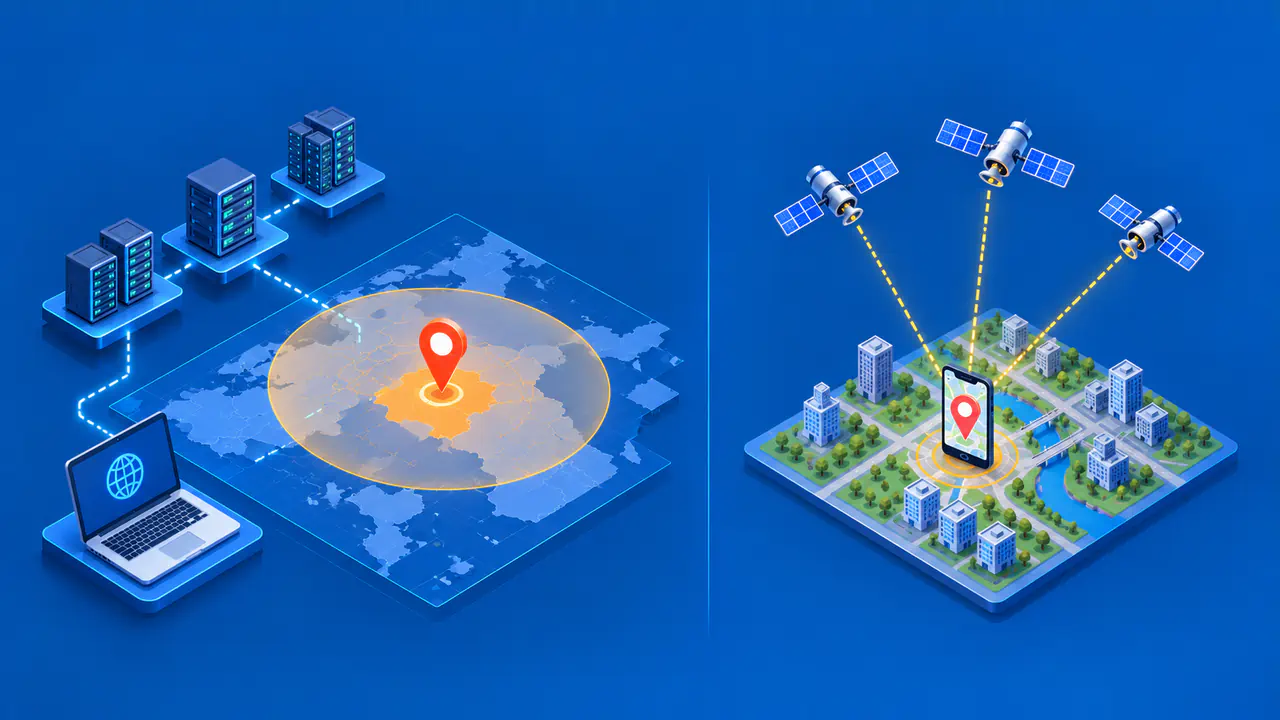
IP location and GPS location answer different questions. An IP geolocation database estimates a location associated with a network address. GPS uses satellite signals to help a device calculate its own position. A phone or computer may then combine GPS with Wi-Fi, cellular, or Bluetooth information and share a device-location result with an app or website when the relevant permission is granted.
The two results can disagree without either system being broken. An IP may belong to a mobile gateway, VPN exit, or provider network far from the device, while the device may measure a position much closer to where it is being used. Even device location has uncertainty. Compare the source, permission state, and accuracy information before treating either marker as a precise fact.
IP Database Location Estimates
A site that receives your internet request sees the source IP used on that path. It can query a geolocation provider for country, region, city, or coordinates associated with the address. The result comes from a data model, not a GPS measurement from your device. Different providers may have different records or levels of detail for the same IP.
IP geolocation varies with country, network type, and ISP practices and is not precise enough to identify a specific household, person, or street address. It may be able to estimate the location of a VPN server or hosted service without locating the person using it. An IP-based marker on a map is therefore best read as an approximate network-location estimate, not a pin on the visitor.
Some products return an accuracy radius or confidence information alongside an estimate. The radius describes an area around the returned coordinates rather than a single exact point. A single city label can hide that uncertainty, especially for a mobile network whose addresses may be used across a large area. If a database cannot support city-level detail, a broader region may be the more honest answer.
The database record can also lag a network change or be missing. That is a property of the provider's data and update process; it does not mean the phone's GPS has changed. The site may choose to use an IP estimate for content defaults even when it has not requested device location. That choice has much less precision than a device-position request in many ordinary cases, but the exact difference varies.
GPS and Device Location Signals
GPS is a satellite-based positioning system. A GPS-capable device uses visible satellites to calculate its position; obstructions can reduce the available signal. Walls, vehicle roofs, tall buildings, and terrain can block line of sight to satellites. A device with other location signals available may use Wi-Fi or cellular information while satellite visibility is poor. A location shown by a phone is therefore often a device-location result from several signals rather than pure GPS alone.
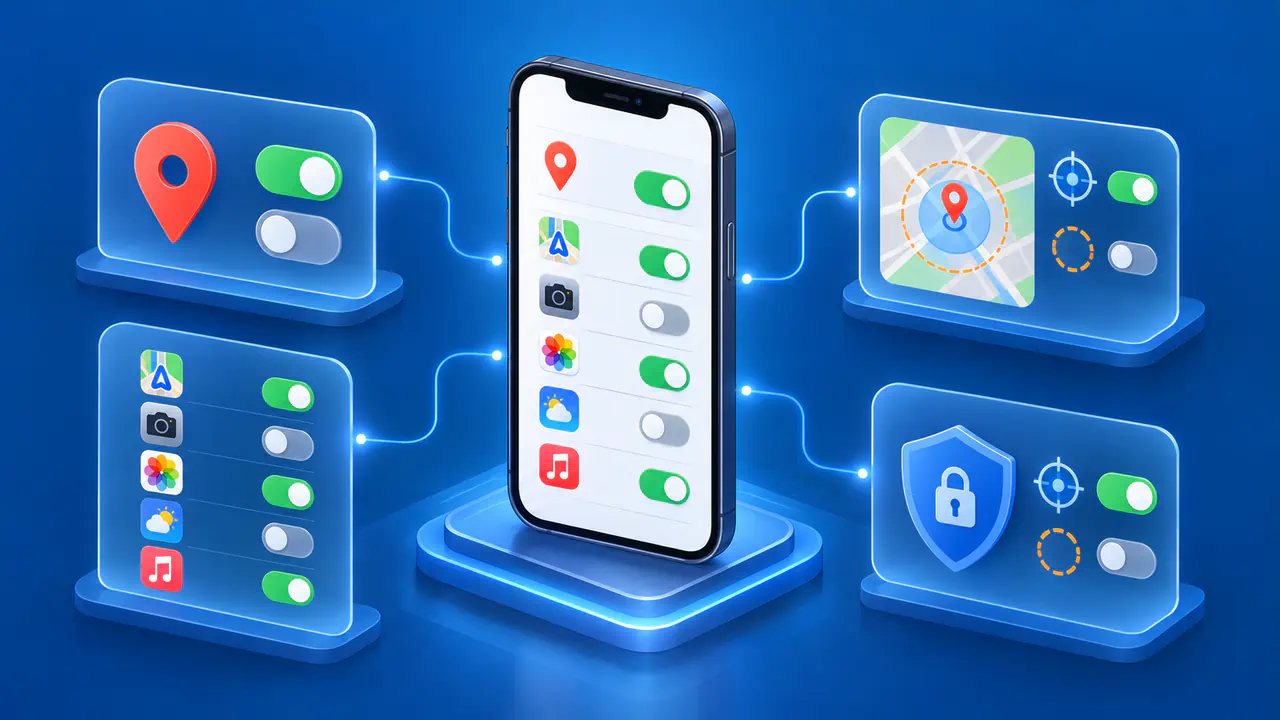
Apple's Location Services can use cellular, Wi-Fi, GPS, and Bluetooth information with permission. A mapping app may show a blue area around a position marker when it cannot determine location precisely. That visual area is a reminder that a device reading can be uncertain, even though it may be more useful for navigation than an IP database estimate.
Not every device has a GPS receiver. A laptop or Wi-Fi-only tablet may rely on nearby network signals and service data. Its device location can still be useful, but calling every location result GPS overstates the sensor involved. If signal data is unavailable or stale, the reported position can be broad or incorrect. A service might fall back to an IP estimate when it cannot obtain device location.
A location result from a browser's Geolocation API includes coordinates and an accuracy value. The accuracy value expresses a radius in meters around the reported coordinates. The browser's accuracy value applies to its estimate of the device's position. An IP geolocation provider describes uncertainty about a network address's location, so the two values do not measure the same thing.
Permissions and Precision
A web page needs your permission to access device location through the browser Geolocation API. On Apple devices, apps also request permission to use Location Services, and access can be changed in the device settings. A user may allow an app temporarily, allow it while in use, or deny it, depending on the platform and version. The exact controls belong to the browser and operating system.
That prompt is for sharing device-position data through the location feature. Denying it does not make the IP address invisible to the site receiving your request. The site may still derive an approximate IP-based location from its network connection. Conversely, granting device location can reveal a much narrower area than an IP estimate, depending on the quality of the signals and what the app requests.
Precision is a range, not a fixed rule that GPS is always accurate and IP is always wrong. Outdoor satellite visibility can improve a GPS result; indoors, a device may lean on Wi-Fi or cellular estimates. An IP database may give a reasonable country while placing the city incorrectly. Review the radius or uncertainty indicator when available and choose the data source appropriate to the task.
For a weather default, a broad region may be adequate. For navigation, a device-position estimate is usually more relevant. For access or fraud decisions, neither a city label nor a map pin alone proves where a particular person was. Treat location as context and respect the permission and privacy expectations of the service involved.
Why the Two Results May Disagree
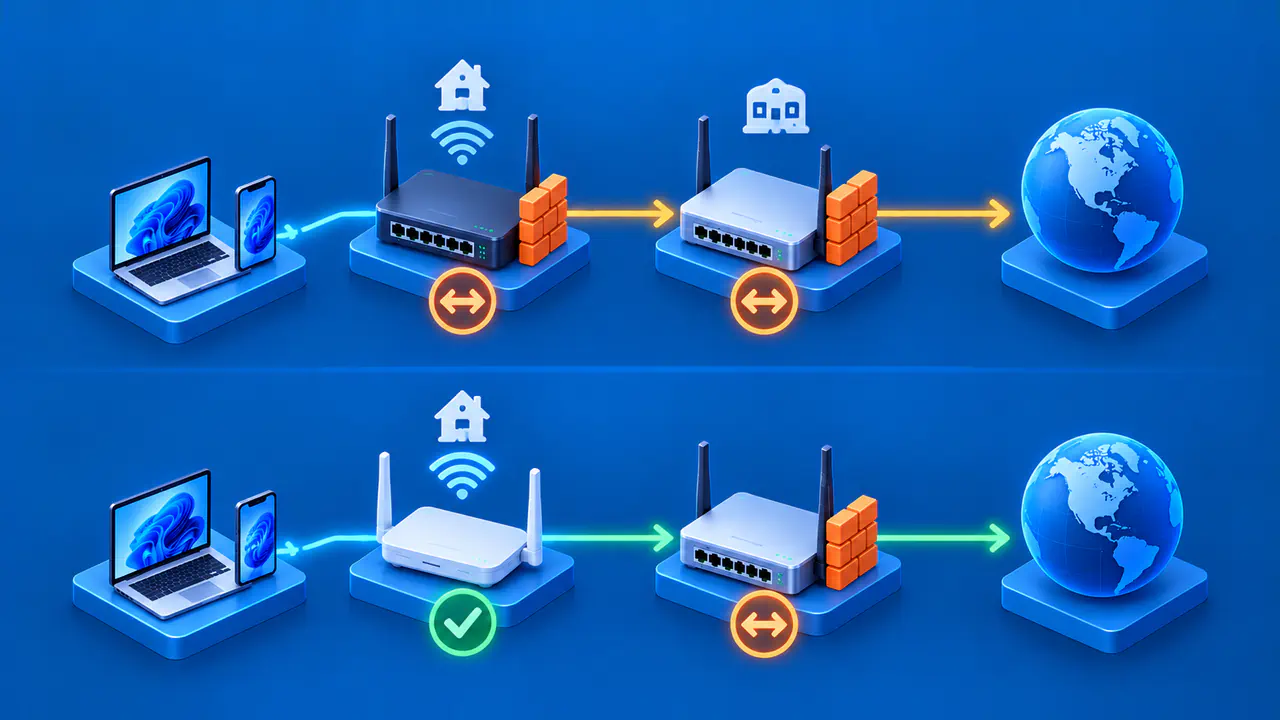
Suppose a phone's map shows its current neighborhood while an IP lookup shows a nearby city. The phone may be using satellite and local radio signals; the IP lookup may be locating an ISP gateway or a record assigned to a wider service area. On a VPN, the IP lookup may reflect the VPN exit. On mobile data, the carrier's network design can make an address appear associated with a place other than the device's current position.
Disagreement can also be caused by timing. A device may return an old cached position, while an IP geolocation provider may still list a previous location for the address. Check whether the two services are reporting the same moment, connection, and device. Switching from Wi-Fi to mobile data can change the visible IP without moving the device at all.
Ask what produced each result before deciding which one to use. An IP database gives an estimate associated with a network address, while device location estimates the device's position. Neither result by itself proves a particular person's exact position. A site still needs permission when requesting device location through the browser.