HTTP/2 vs HTTP/3: Performance Differences

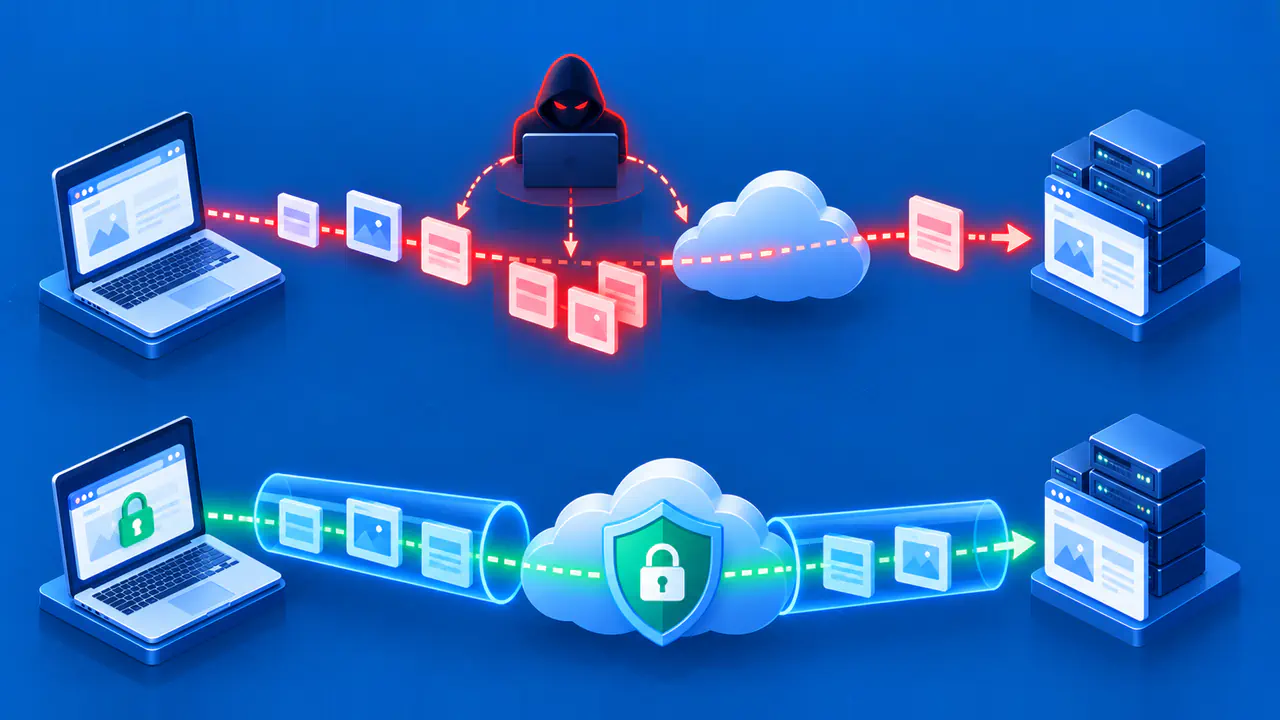
HTTP/2 and HTTP/3 carry the same core HTTP request and response semantics, but they use different transports. HTTP/2 commonly runs over a TLS-protected TCP connection for web traffic. HTTP/3 maps HTTP onto QUIC, a secure transport built on UDP. Both can carry several requests and responses at once on one connection, but their performance depends on the workload and network path.
HTTP/3 can reduce interference between streams when packets are lost and can support quicker connection establishment or network migration in suitable conditions. HTTP/3 performance can also be limited by firewalls, UDP restrictions, server implementation, congestion, or application behavior. Compare both protocols on the pages and networks the service actually uses.
Compare the Transport Layers
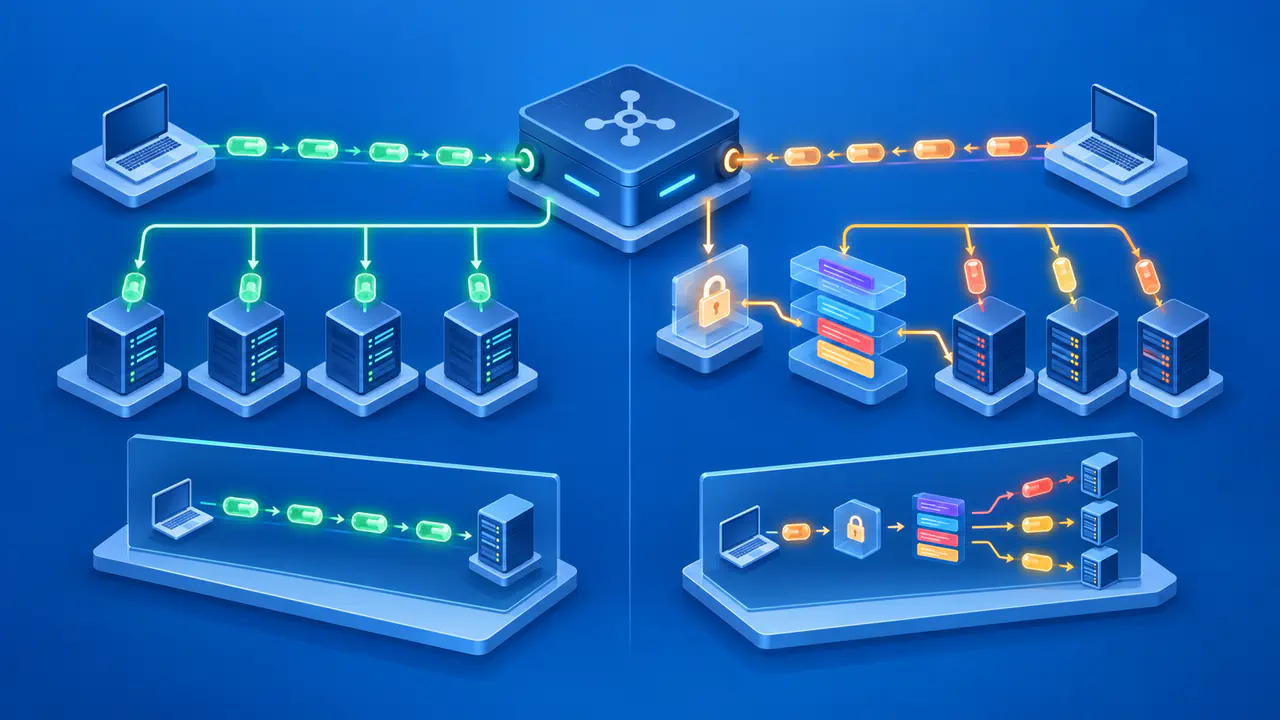
In HTTP/2, each request and its response use a stream, and messages are split into smaller units called frames. These streams share a TCP connection, with TLS normally securing web traffic. TCP provides reliable, ordered byte delivery to the HTTP/2 layer. HTTP/2 adds stream identifiers and interleaves frames, allowing multiple exchanges to progress without opening a separate TCP connection for each resource.
HTTP/3 uses QUIC streams. QUIC operates over UDP but supplies reliability, flow control, congestion control, and security for its own connections. Describing HTTP/3 as merely UDP would miss these guarantees. QUIC also combines transport setup with TLS 1.3, while HTTP/2 over TCP establishes TCP and negotiates TLS separately. Reused connections and resumed sessions can change the setup cost for either protocol.
Changing the HTTP version does not remove delays in application code. A database query, oversized image, or distant origin can dominate response time regardless of HTTP version. Header compression and multiplexing may reduce overhead, but they do not eliminate the time needed to generate and render a page.
Understand Stream Blocking under Packet Loss
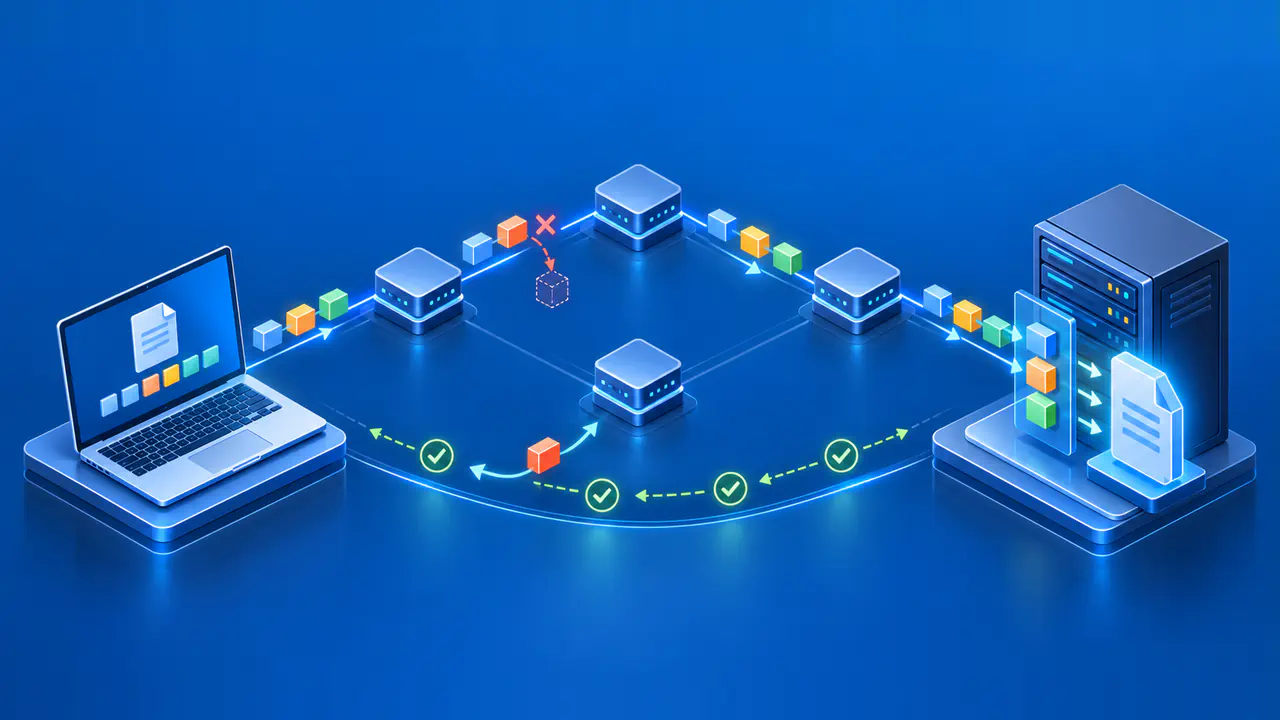
HTTP/2 can interleave responses, so one response does not have to finish before another starts on the same connection. TCP still delivers the underlying bytes in order. If a packet carrying TCP data is lost, later bytes cannot be delivered to HTTP/2 until the missing data arrives, even if those later bytes belong to a different HTTP/2 stream. This delay is called TCP head-of-line blocking.
QUIC provides independently delivered streams within a connection. A lost packet carrying bytes for one stream need not prevent already received bytes for another stream from being delivered. This can help when several resources are in flight on a lossy path. It does not mean loss has no cost: retransmission, congestion control, and limited bandwidth still affect the connection. Congestion control can reduce the sending rate for the connection, affecting all its streams. A page may also depend on a resource whose missing data has not yet arrived.
In a clean, low-latency network, this distinction may have little visible effect. On a high-loss mobile path, it may matter more. The sizes of the resources and the order in which the page needs them determine how much independent stream delivery helps the page display its content.
Consider Setup and Connection Migration
On a typical new QUIC connection without packet loss or an extra handshake exchange, the client can send its first HTTP request after one network round trip. With HTTP/2 over TCP, the client normally establishes TCP and then negotiates TLS before sending the request. HTTP/2 can also use TLS 1.3, so a fair comparison must record the TLS version instead of assuming all HTTP/2 connections use an older handshake.
Resuming a previous session can allow QUIC to send early data before the new handshake completes, but that requires stored session information and server acceptance. Reusing an open connection avoids a new handshake for either protocol. Measure new, resumed, and reused connections separately; these are different starting conditions.
QUIC connection identifiers can help a connection survive a change in network address, such as moving from Wi-Fi to mobile data, when endpoints support migration. A normal TCP connection is identified by both endpoints' IP addresses and ports, so an address change usually requires a new connection. QUIC must check that the new network path works, and endpoint settings or network restrictions can prevent migration. For a short page visit without a network change, the feature may have no practical effect.
Separate connection setup time from the time the browser spends loading and displaying the page. DNS lookup, certificate validation, redirects, and service-worker behavior can alter the timeline. An HTTP/3 handshake advantage may be hidden by a slow origin response or a large script execution task.
Account for Negotiation and Fallback
A client needs to discover and reach an HTTP/3 endpoint. In web deployments, an HTTPS response can advertise HTTP/3 through the Alt-Svc response header; other discovery mechanisms may also be available to capable clients. The browser can continue using HTTP/2 when it has not learned a reachable HTTP/3 endpoint or cannot use UDP to the endpoint. Observing HTTP/2 therefore does not prove the server lacks HTTP/3 support.
Firewalls, proxies, and some access networks can block or impair UDP traffic used by QUIC. Keep a healthy HTTP/2 path and test fallback, rather than making a site dependent on one transport. Verify the protocol actually used for each request in developer tools or trustworthy server telemetry. An advertised endpoint or an enabled server setting does not prove that a particular request used HTTP/3.
With a content delivery network (CDN), browser and origin connections must be distinguished. A browser may use HTTP/3 to the CDN edge while the edge uses another protocol to the origin. A protocol shown in the browser identifies the browser-to-edge connection, not the protocol between the CDN and the origin server. Check the CDN's origin connection information separately when comparing infrastructure changes.
Measure a Representative Workload
Compare the same pages and API operations under HTTP/2 and HTTP/3 with equivalent cache state, geography, device class, and server version. Include new and reused connections, stable and lossy networks, and a path where UDP is unavailable. Record connection setup, time to first byte, transfer completion, and when the page displays its main content. Choose the same timing definitions and measurement tool for both protocols, because time to first byte can include DNS, redirects, connection setup, and server processing. Use repeated runs and report variation, because a single request can be dominated by transient network conditions.
Segment results by protocol actually negotiated. Separate the first visit from later visits: discovery, connection reuse, and caching can change the comparison. Inspect whether an improvement came from transport, asset size, CDN routing, or server configuration. If HTTP/3 helps mainly on connections with packet loss, report that condition alongside the result. Keep any difference in errors or fallback delays visible as well, since a faster successful request does not account for failed connection attempts.