QUIC Protocol and HTTP/3 Explained

QUIC is a transport protocol that runs over UDP and provides encrypted connections with reliable streams that can carry several exchanges at once. HTTP/3 is the version of HTTP that uses QUIC to carry web requests and responses. QUIC manages the connection and data delivery; HTTP/3 defines the messages exchanged over that connection.
UDP alone does not provide reliable delivery or encryption, and many applications use UDP without QUIC. For HTTP/3 to work, the browser and server must both support HTTP/3 over a compatible QUIC version, and the network must allow the required UDP traffic.
UDP Carries QUIC Packets
UDP supplies datagrams between endpoints. By itself it does not promise ordered delivery, retransmission, or congestion control. QUIC implements the transport features it needs above UDP, including packet acknowledgment, loss detection, congestion control, flow control, and connection establishment. Therefore, a lost UDP datagram does not automatically mean lost application data: QUIC can detect and retransmit the required information.
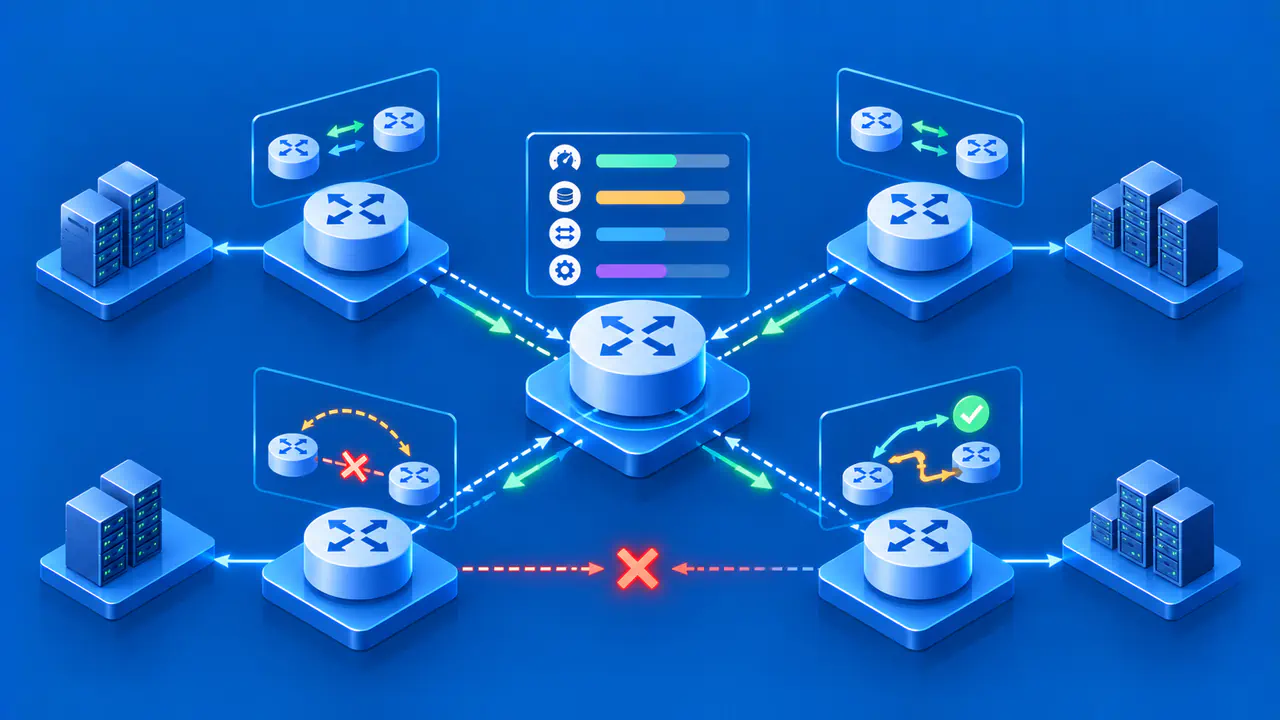
A client typically contacts a server over UDP for QUIC, while an HTTPS site may also offer HTTP/2 over TCP. The UDP and TCP traffic can pass through the same routers, but the connections use different transport protocols. Some firewalls, proxies, or access networks do not pass the UDP traffic needed for QUIC. A browser may then use another supported HTTP version. Seeing an HTTP/2 request does not alone identify whether the server, browser, discovery mechanism, or network path prevented HTTP/3.
QUIC packets have their own format and protection. A network operator can identify that UDP traffic is present but cannot treat the encrypted payload as ordinary plaintext HTTP. Transport behavior still depends on available bandwidth, packet loss, and endpoint implementation. All streams in a connection still share the bandwidth available on the network path.
Reliable Streams Support Independent Exchanges
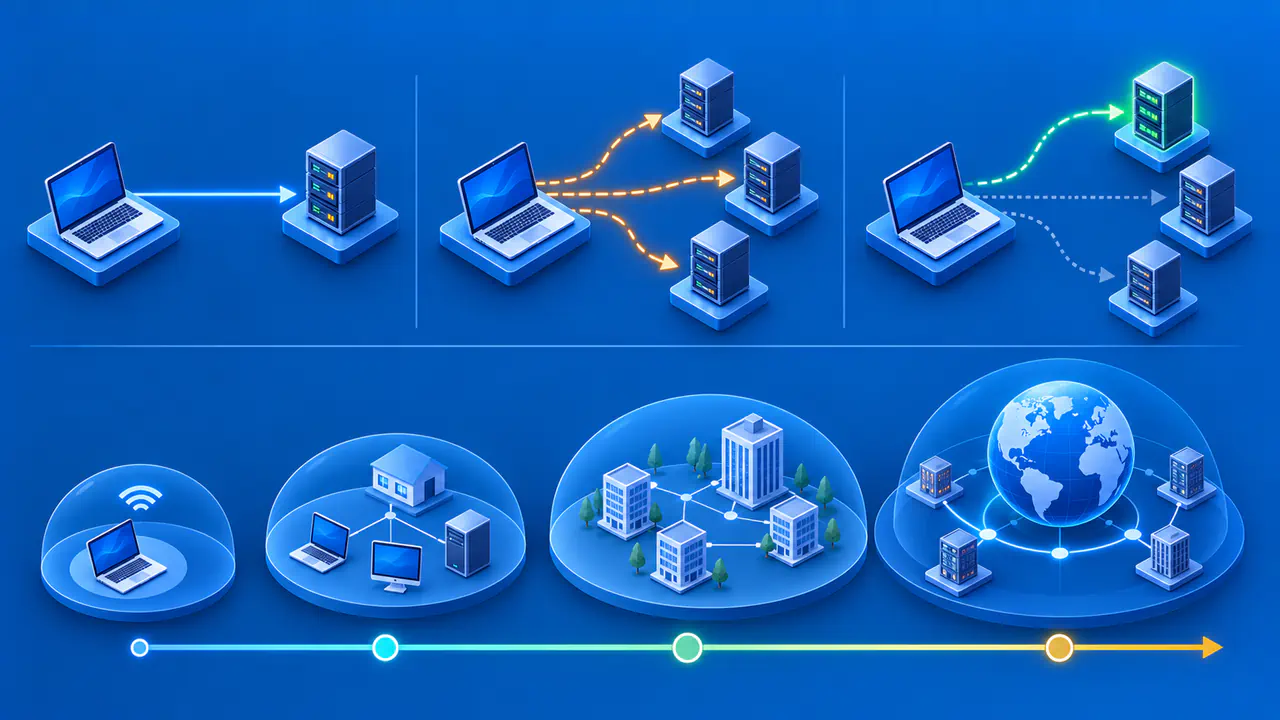
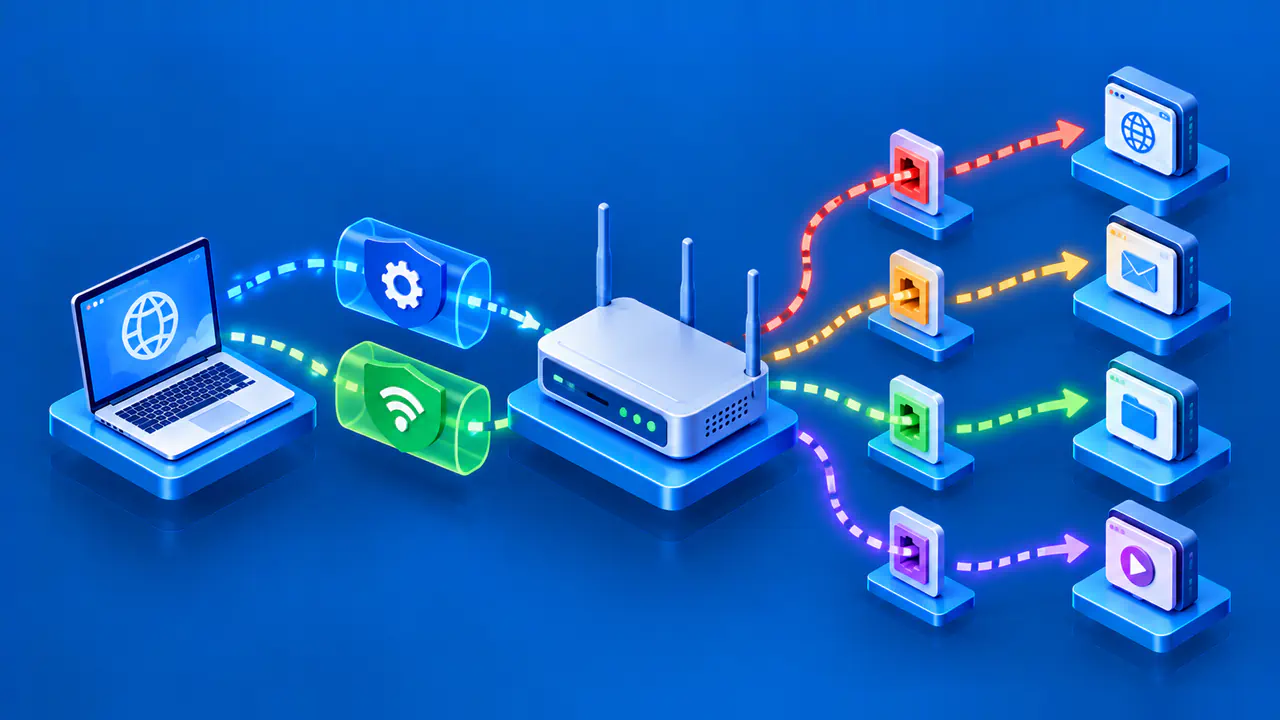
Within one QUIC connection, endpoints can open multiple streams. Each stream carries an ordered sequence of bytes, and QUIC handles reliable delivery for that stream. Separate streams can make progress independently at the delivery layer: a missing packet for one stream need not block already received bytes on another. That is a key reason QUIC suits many concurrent web exchanges.
Reliable delivery can still involve delays. Missing stream data must be sent again, and congestion control can reduce the sending rate for the connection as a whole. A page may also depend on a resource whose data has not yet arrived.
Flow control serves a different purpose: protecting the receiver from more stream data than it can buffer. The receiver advertises limits for each stream and for the total stream data on the connection, then increases those limits as data is consumed. A sender that reaches either limit must wait for more credit; receiving packet acknowledgments alone does not grant that credit.
A bidirectional QUIC stream carries bytes in both directions, while a unidirectional stream carries bytes in only one direction. Either endpoint can open streams, subject to limits set by the other endpoint. The application protocol determines what the bytes on each stream mean.
Encryption and Connection IDs
QUIC integrates TLS 1.3 for authentication and key establishment. The keys established through TLS protect QUIC packets carrying application data. On an initial HTTPS connection, the client validates the server certificate and identity; a resumed session can use authentication information established earlier. Encryption does not authenticate an application user or guarantee that every response is trustworthy; those remain separate application concerns.
QUIC uses connection IDs so a connection is not identified only by an IP address and port pair. For example, a phone switching from Wi-Fi to mobile data may keep the same QUIC connection even though its IP address changes. During migration, QUIC checks reachability on the new path. Endpoint settings, network restrictions, or a long interruption can still prevent the connection from continuing.
A connection can use several connection IDs over its lifetime. Endpoints can issue replacement IDs and retire old ones, which helps avoid exposing the same identifier on different network paths. Changing an ID does not create a new connection or make the traffic anonymous.
HTTP/3 Maps HTTP onto QUIC
HTTP/3 defines how an HTTP request and response are represented on QUIC streams. It retains familiar concepts such as methods, status codes, headers, and bodies. HTTP/3 splits messages into units called frames, using a format different from HTTP/2. Sending HTTP/2 frames through a UDP socket does not produce a valid HTTP/3 exchange.
For each request, the client opens a bidirectional QUIC stream. Request headers and any request body travel toward the server; the response returns on that same stream. HTTP/3 uses HEADERS frames for header fields and DATA frames for the body, while QUIC divides the resulting stream bytes into its own STREAM frames inside packets. UDP datagrams carry those packets, so an HTTP message is not the same unit as a QUIC packet.
Separate unidirectional streams carry connection settings and control messages. HTTP/3 uses QPACK to compress header fields, with additional streams carrying compression instructions. QPACK accommodates streams arriving independently, although a header block can still wait for compression information. Request methods such as GET and POST keep their usual HTTP meanings.
QUIC can also transport application protocols other than HTTP/3. During TLS negotiation, the endpoints use Application-Layer Protocol Negotiation (ALPN) to agree on the application protocol; the identifier for HTTP/3 is h3. Both endpoints therefore know how to interpret the stream contents.
Check Support and Fallback
For a site to use HTTP/3, the browser needs to learn a reachable endpoint and the server must support the protocol over an allowed UDP path. An HTTPS server can advertise an alternative service through the Alt-Svc response header, and clients may use other supported discovery methods. The first request can still use HTTP/2 while the browser learns and tests the alternative. Later visits may differ because discovery and connection reuse have changed.
Inspect the protocol actually negotiated in browser developer tools or server telemetry. Test both a network where QUIC works and one where UDP is unavailable, confirming that the site remains usable through its fallback path. With a content delivery network (CDN), the browser connects to an edge server, which may contact the origin server separately. A browser using HTTP/3 does not imply that the CDN uses QUIC for its origin connection.
Record the browser version, server configuration, network path, and observed protocol if deployment support matters. Do not infer a performance gain solely from the HTTP/3 label. A successful request confirms that the selected protocol worked for that request; it does not establish how the site will behave on every network.