TCP Fast Open and Website Connection Setup
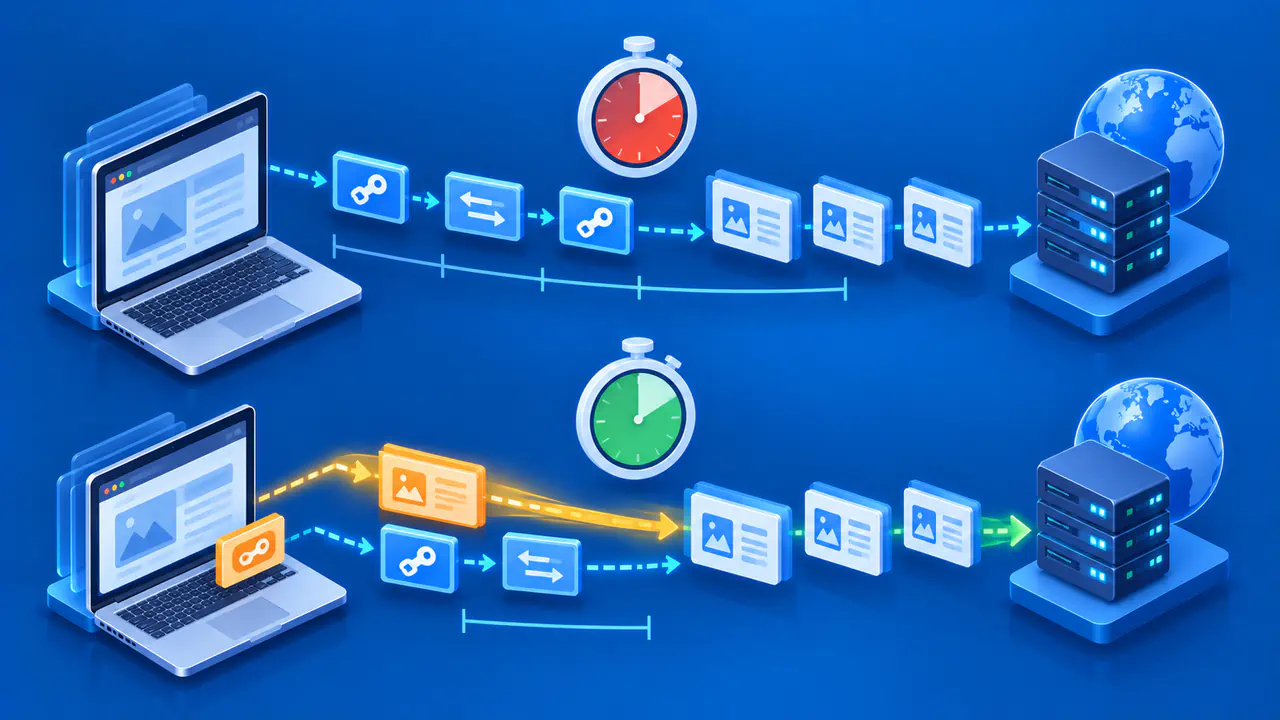
TCP Fast Open, or TFO, lets a server process data from a client's opening TCP packet before the new connection's handshake finishes. The client normally includes a Fast Open cookie obtained from that server on an earlier connection. On a compatible network path, processing data early can reduce the wait for a response. TFO remains an experimental TCP extension whose use requires compatible endpoints and an application that can tolerate repeated early data.
For a website, reducing the delay during TCP setup is only one part of completing a request. DNS lookup, TLS negotiation, server processing, and page rendering can still add delay. Any data processed before the handshake completes must also be safe to process more than once.
The Normal TCP Handshake
A normal TCP client starts a connection with a SYN packet. The server replies with SYN-ACK, and the client acknowledges that reply. The three-way handshake establishes shared connection state before the server normally delivers application data. For a new short connection, this setup adds delay before a request can be processed. Later requests sent over that open connection have no new TCP handshake for TFO to shorten.
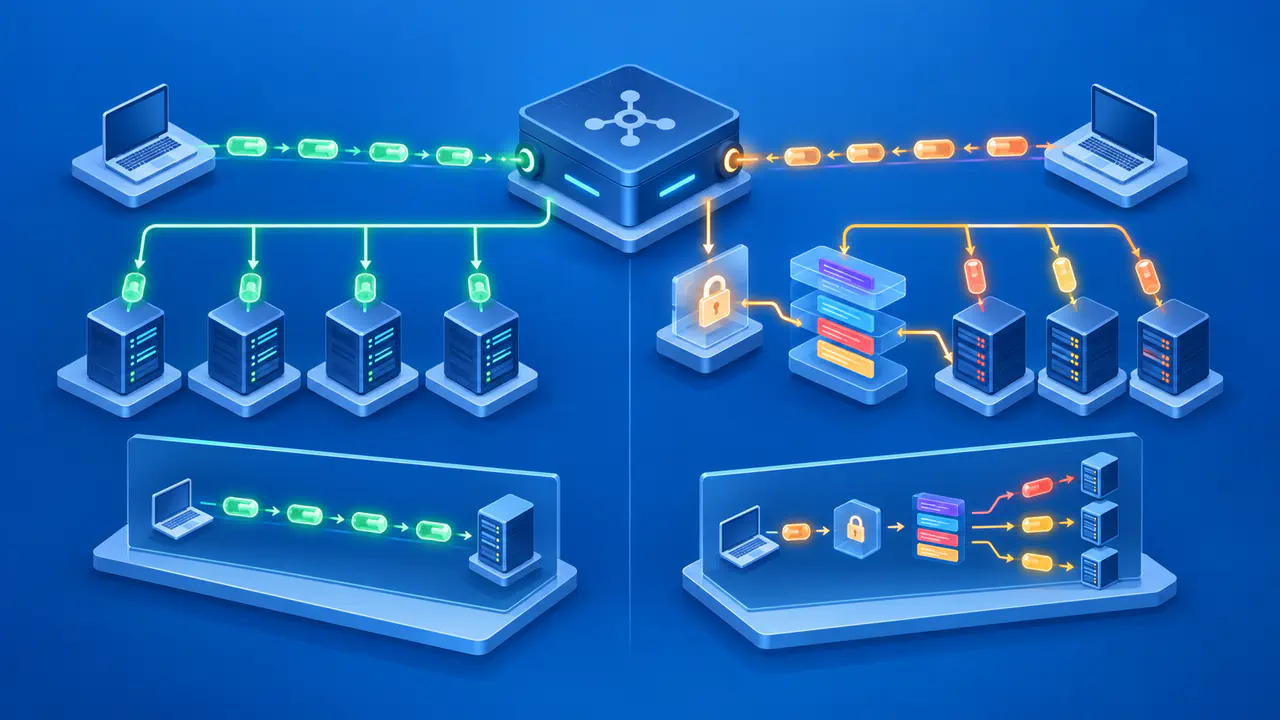
Websites often reuse connections and may communicate through a content delivery network (CDN) or proxy. With a CDN, the browser connects to an edge server, which may use a separate connection to the origin server. The delay visible to a visitor depends on which connections need to be opened and how long the later TLS and application steps take. A reduction in TCP setup time alone does not measure the time needed to load the whole page.
How a Fast Open Cookie Works
In the usual exchange, a client first requests a Fast Open cookie using a TCP option in its SYN packet. The server returns a cookie in a SYN-ACK, and the client caches it for a future connection. The client stores the server-generated value without interpreting it. The server uses the cookie to check the client's source IP address before allowing early processing, which helps limit abuse using forged addresses. A Fast Open cookie does not sign anyone into a website.
On a later connection, the client can include the cookie and application data in its SYN. The server checks the cookie before accepting the data for early application processing. If the cookie is invalid or the server does not accept Fast Open, the server can acknowledge only the SYN and leave the early data unacknowledged. The client then sends that data again with its acknowledgment, allowing the connection to proceed normally. Obtaining a cookie on the first connection is preparation for a later Fast Open exchange, not proof that early data was accepted.
Cookies can expire, and a server may rotate its validation keys. Address changes, load balancing, and different edge nodes can affect whether a cached cookie is accepted. For example, servers sharing one public address may reject one another's cookies if their validation keys differ. A client that previously obtained a cookie therefore still depends on the server accepting that cookie on the next connection.
Early Data and Connection Latency
When the server accepts data carried in the SYN, it can deliver that data to the application before the normal three-way handshake finishes. It may send response data during setup under TCP congestion rules. An accepted Fast Open exchange can save up to one round trip compared with starting the data exchange after the TCP handshake. Packet loss, obtaining a cookie, or waiting for later processing can reduce or hide that saving. The initial message must fit in the SYN packet if the server needs the complete message before it can respond; otherwise, the remaining bytes arrive later.
TFO operates at the TCP layer. TLS 0-RTT and QUIC early data are different mechanisms with their own negotiation and replay properties. For HTTPS, the early TCP data can contain the TLS ClientHello, the message that starts TLS negotiation. Delivering that message early can overlap TCP setup with the start of TLS, without sending a plaintext HTTP request. Encrypted HTTP data can be sent only when the TLS connection state permits it; TFO does not replace TLS authentication or encryption.
DNS, redirects, cached content, server processing, and rendering can account for much of a page's loading time. TFO may help with short connections opened repeatedly, but keeping a usable connection open already avoids another TCP handshake. Compare equivalent connection states before attributing a timing difference to Fast Open.
Network Compatibility and Fallback
Network devices can strip TCP options, drop unusual SYN packets, or otherwise interfere with early data. Client and server operating systems need compatible TFO support, and the applications must use that support. A website operator should check where TFO is enabled: browser to CDN edge, CDN to origin, or a direct client-to-server path. TFO support must be checked separately for each connection.
Design for fallback to conventional TCP setup. A client may need to retry without Fast Open when the path does not accept it. Waiting for the first attempt to time out can add delay even when fallback is implemented correctly. Observe successful early data delivery, rejection, and retry rates rather than treating an enabled configuration flag as proof that users benefit.
Test on representative access networks and through the same proxy and load balancer path users encounter. Record new versus repeat connections and whether a valid cookie was available. Avoid collecting raw client addresses or session data when aggregated counters can answer the deployment question.
Protect Operations from Replay
Data in a SYN can reach an application more than once if a duplicate arrives after the receiver has discarded the original connection state. A valid Fast Open cookie does not ensure that the application performs an action only once. Requests that place orders, transfer funds, create accounts, or otherwise cannot tolerate duplicates must wait until the TCP handshake completes unless a verified mechanism prevents duplicate execution.
Even an apparently read-only request can have effects through analytics counters or resource use. Decide which operations can safely be repeated, and ensure that the application applies the same decision when accepting early data. Normal authentication and authorization still determine who may use the service and which actions they may perform.
If evaluating TFO, document the service and port, client and server versions, network paths, accepted cookie rate, retry behavior, and the actual application latency distribution. Include a replay-risk review before enabling early processing. Compare successful requests and failures under the same test conditions, because a faster result on one network may come with extra retries on another.