What Is 5G and How Does It Work?
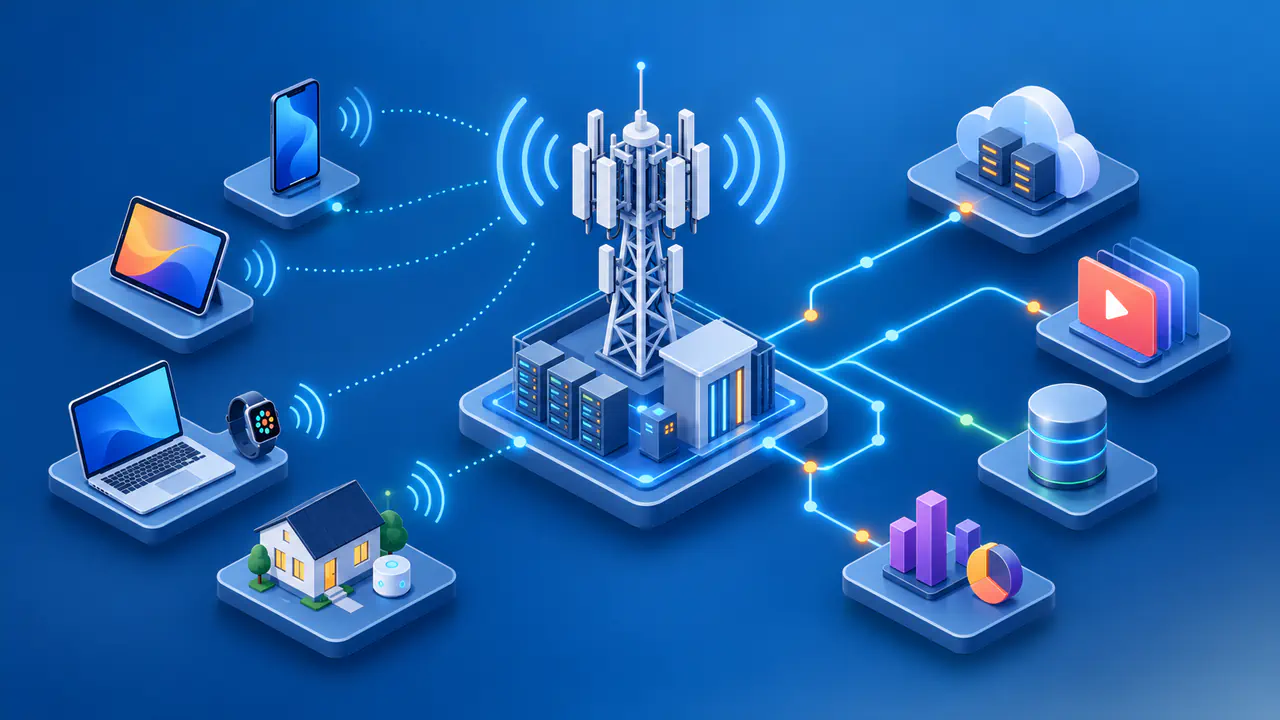
5G is the fifth generation of cellular technology. It describes a family of network capabilities and standards, not one guaranteed speed on every phone.
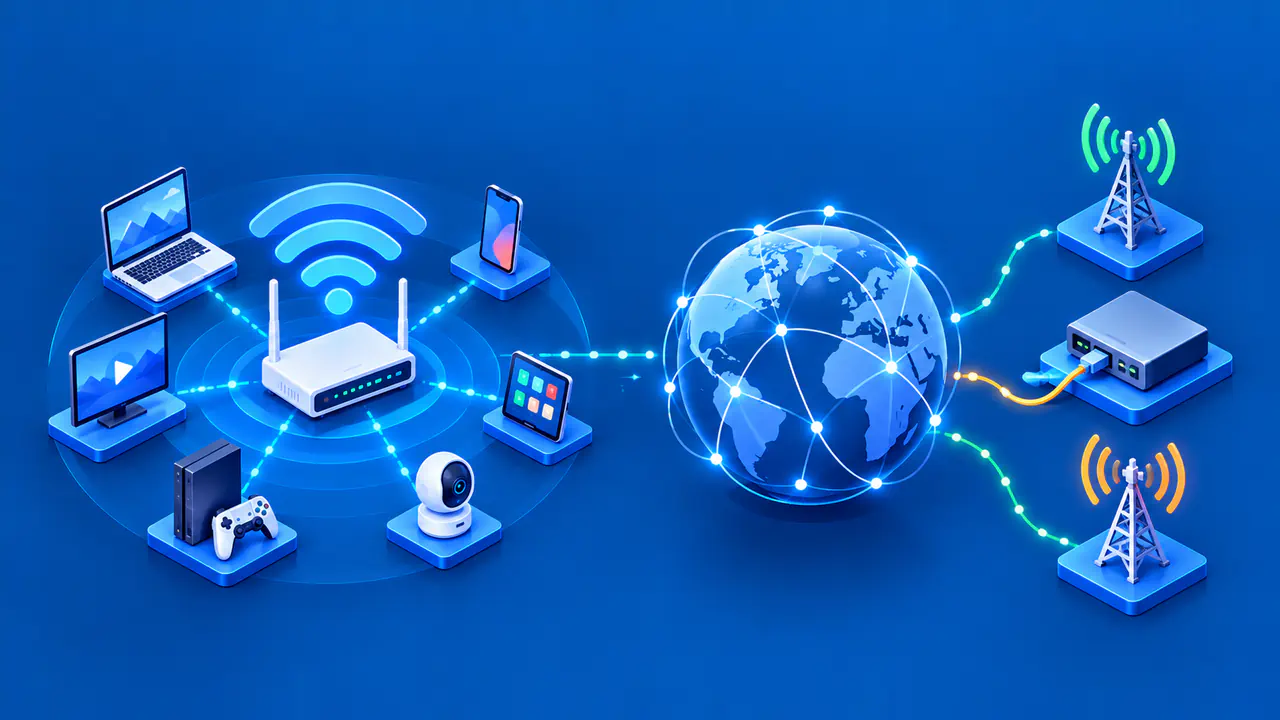
A 5G device connects by radio to a mobile operator's access network, while the operator's wider network checks who can connect, keeps track of devices as they move, and carries data to services. You can use that connection for mobile internet on a phone or, with a suitable receiver and plan, broadband at a fixed address. The radio link and the network behind it both affect how well the service works.
How Does a 5G Connection Work?
A compatible phone or fixed wireless receiver exchanges radio signals with a nearby cell site. Cellular 5G uses a radio technology called 5G New Radio, or NR. The radio access network allocates capacity among devices so they can send and receive data over shared radio channels.
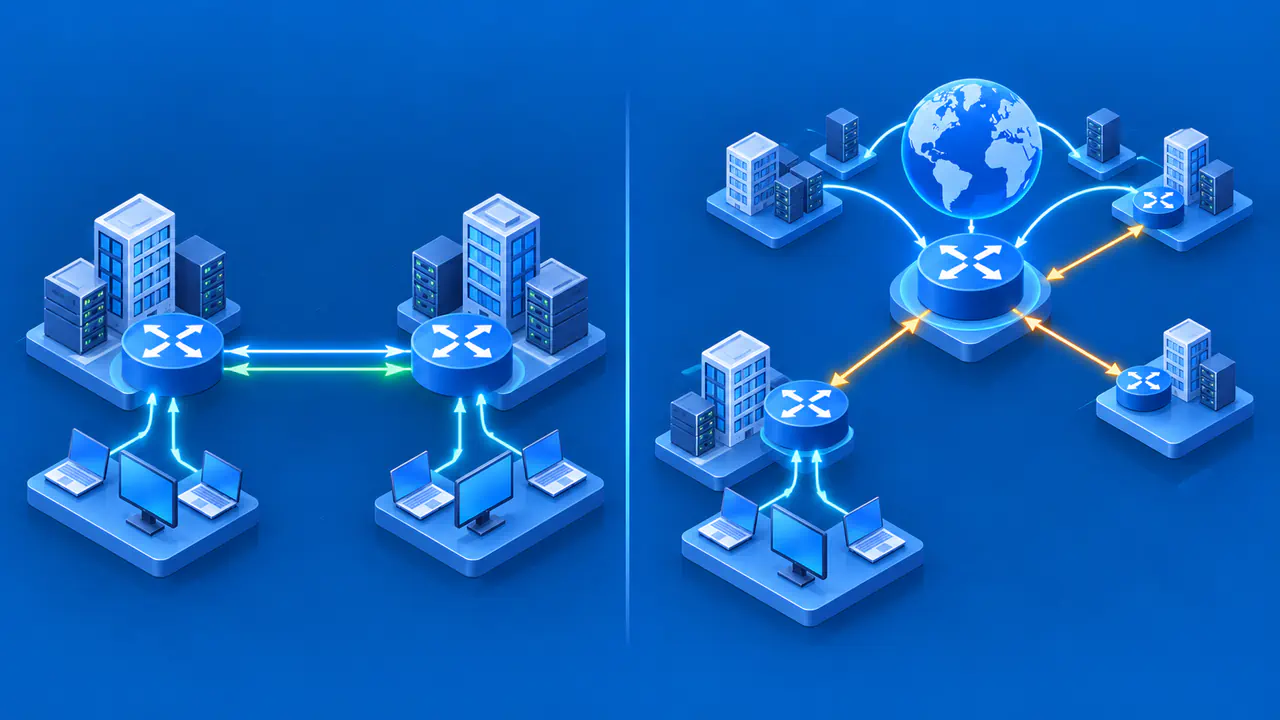
The operator's core network checks the subscriber's identity, applies the rules for their service, manages data sessions, and routes data to the internet or other services. Backhaul links carry data between radio sites and the rest of the network. For a website request, the radio connection is therefore only part of the path between the device and the website's server.
In a common non-standalone deployment, 5G NR works alongside a 4G LTE radio connection and a 4G core network. Standalone 5G connects 5G NR to a 5G core without relying on that 4G connection. These deployment choices affect which network features are available, but a phone's 5G icon alone does not identify the architecture or guarantee that every transmission uses 5G.
Why Is It Called a New Generation?
Cellular generations mark broad changes in radio and network standards. 5G expands the capacity and design options available to operators beyond earlier mobile systems. Its capabilities include higher data rates, improved spectrum efficiency, support for many connected devices, and lower radio latency. These are separate measures: a network serving connected sensors has different priorities from one carrying large downloads or a latency-sensitive industrial task.
The performance targets in 5G standards apply under specific test conditions. Peak speeds reported in demonstrations also depend on the equipment and setup. Neither tells you what speed you will get in a crowded building. Latency figures that measure only the radio link leave out delays from the wider network, remote servers, and software.
5G Frequency Bands and Antennas
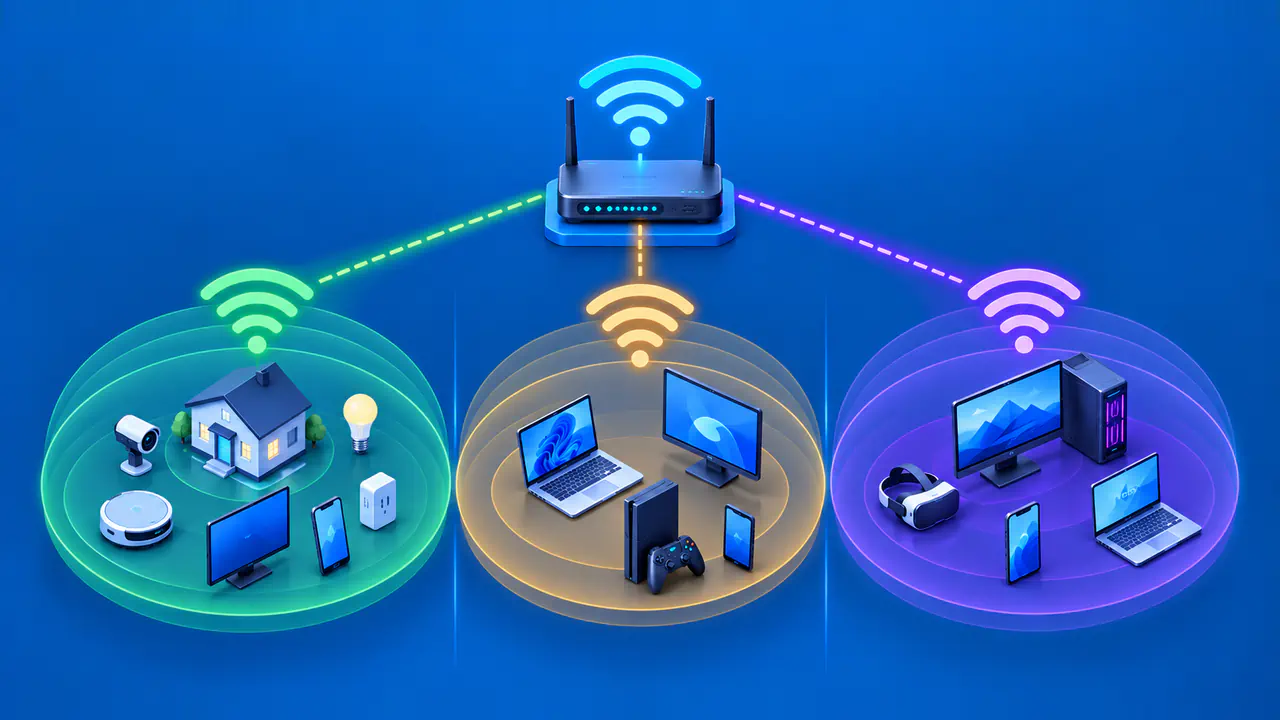
5G can use low-, mid-, or high-frequency bands; it does not require millimeter-wave spectrum. Lower-frequency signals generally travel farther and pass through obstacles more easily, while mid-band deployments balance coverage with access to wider channels. High-band millimeter-wave deployments can use very wide channels for substantial capacity, but buildings and distance limit their reach. Operators may need more closely spaced sites to provide that service throughout an area.
Antenna design also matters. Many 5G networks use large antenna arrays and beamforming to steer radio energy toward a device. Multiple-input, multiple-output technology, or MIMO, can carry separate data streams at the same time to increase capacity when radio conditions allow. These techniques improve how the network uses spectrum; they do not remove limits caused by interference, obstacles, or shared capacity.
What Affects Your 5G Connection?
Your device, plan, location, and the network's available capacity all affect your 5G connection. Your device must support the frequency bands your operator uses, and your plan must include 5G access. You also need coverage where you use the device.
Walls, distance, terrain, and movement can affect the signal reaching your device. The available spectrum, channel capacity, number of active users, backhaul, traffic management, and service you are accessing also affect performance.
If your device moves outside usable 5G coverage, it may switch to 4G or another available cellular connection. That transition is part of how a mobile service maintains access; it does not mean the phone is broken. To assess service, compare the operator's local coverage information with measurements at the places and times you use the device, using the same device and plan where possible.
Mobile 5G and Fixed Wireless Access
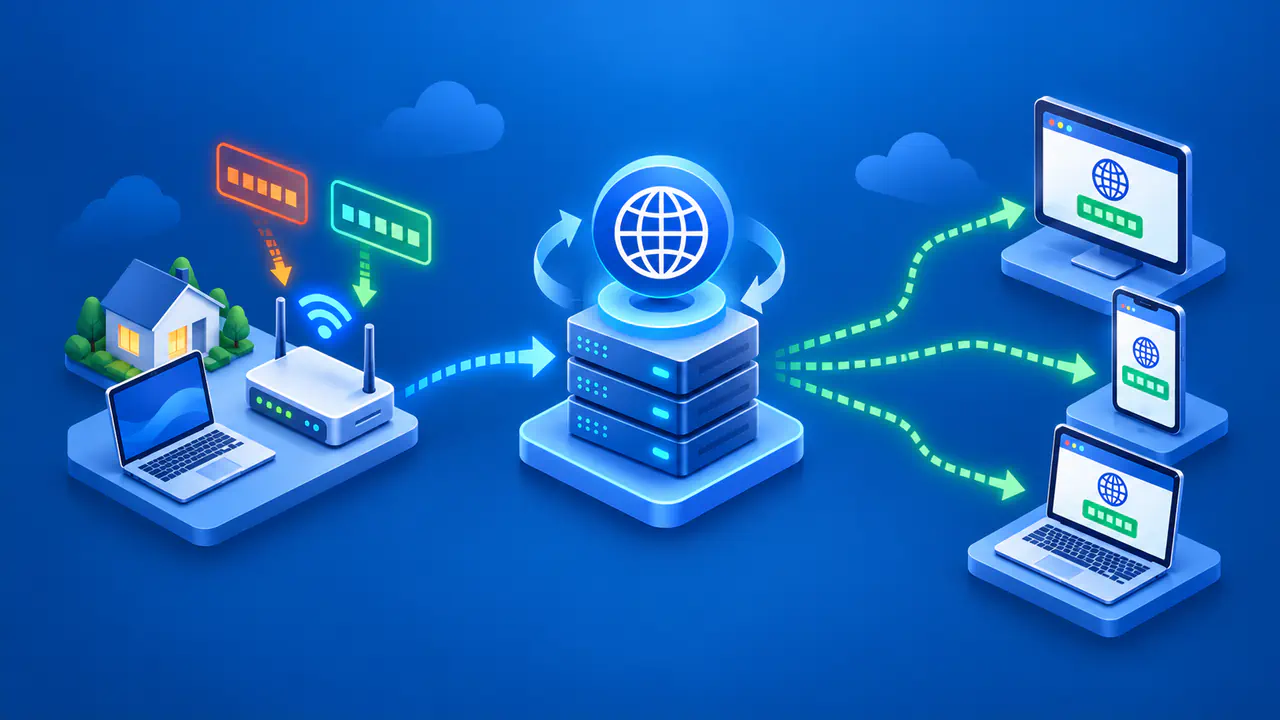
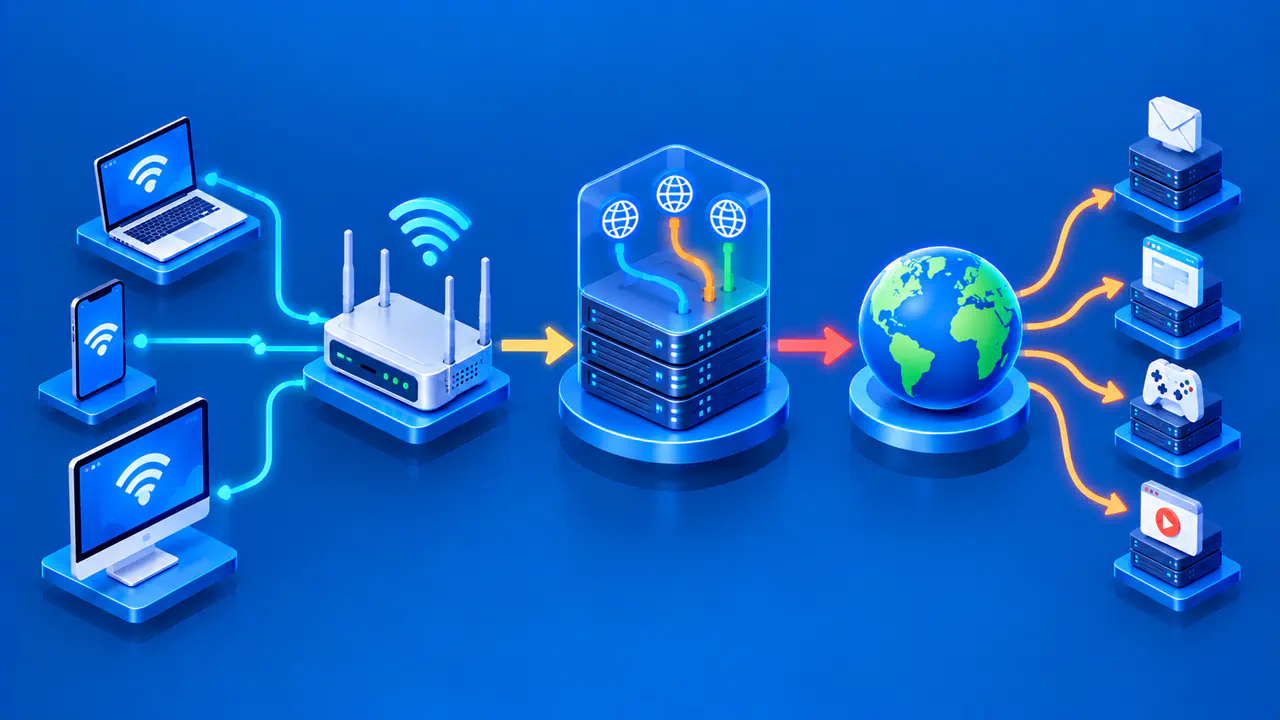
On a phone, 5G provides mobile access while you move between supported cells. In 5G fixed wireless access, a receiver installed for a home or business connects to the operator's network by radio instead of through a cable to the building. A router can then share that connection over local Wi-Fi or Ethernet. Fixed access may be a practical broadband option where offered, but its performance still depends on the radio link, location, capacity, plan, and installation.
The Wi-Fi inside a home remains a separate local network. A slow laptop on a 5G home router may be limited by Wi-Fi conditions even when the router's cellular link is healthy. Conversely, a good Wi-Fi signal to the router cannot improve a weak cellular connection outside. Comparing a wired connection to the gateway with Wi-Fi on the same computer can help identify whether the local wireless link contributes to a slowdown.
5G Cellular and 5 GHz Wi-Fi
The 5G in cellular service means fifth generation. In 5 GHz Wi-Fi, 5 GHz identifies the frequency band used by the local wireless network. A phone can use 5 GHz Wi-Fi while cellular service is off, or use 5G cellular while Wi-Fi is off. A 5G home internet gateway can use cellular 5G for internet access and 5 GHz Wi-Fi to connect devices inside the home.