Internet Peering vs Transit: How Networks Connect
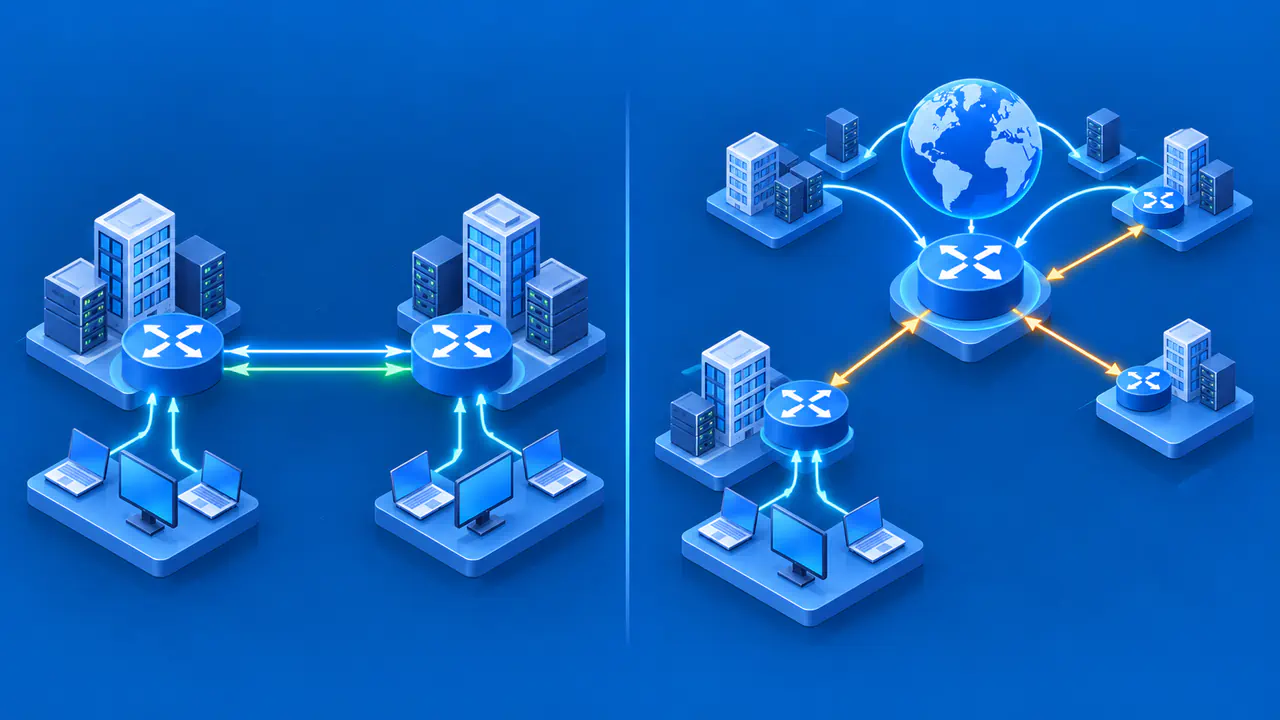
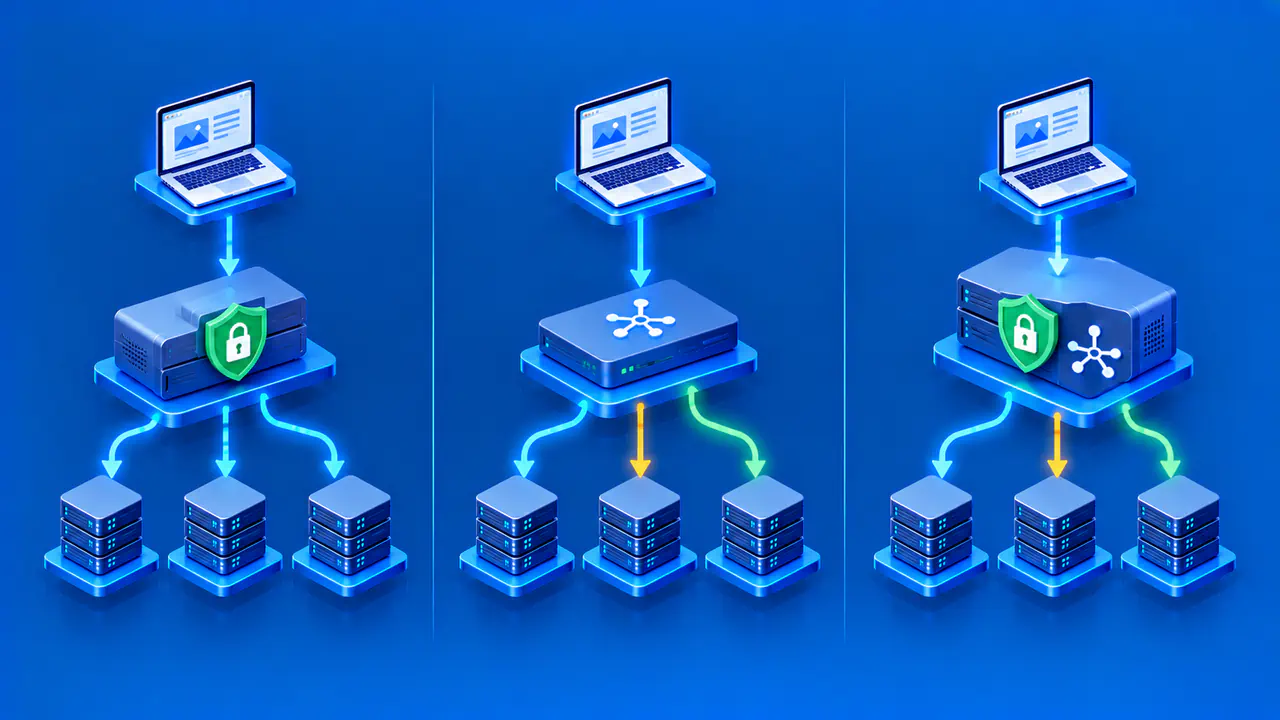
Internet peering lets two networks exchange traffic for the destinations covered by their peering relationship. IP transit is a service in which an upstream network carries its customer's traffic toward the wider Internet and provides a way for other networks to reach that customer. The key difference is which destinations each service lets a network reach, regardless of the cable connecting the routers.
An Internet exchange point, or IXP, provides a shared network through which participants can exchange traffic. Networks can also establish a private connection between their routers. Either arrangement still needs a defined routing relationship: plugging into an exchange does not provide unrestricted access through every other participant.
These terms describe connections between independently operated networks, commonly identified as autonomous systems, or ASes. Each AS has an autonomous system number, or ASN, and its own external routing policy. Knowing whether a connection provides peering or transit helps explain why some destinations are reached directly while others require an upstream provider.
Connections and Routing Agreements
An interconnection involves a physical link, an agreement about carrying traffic, routing information, and packet forwarding. The link or Ethernet service lets the routers communicate. The agreement defines which traffic the networks will carry. BGP, the Border Gateway Protocol, tells routers which destinations are reachable through other networks. Each router then uses its selected routes to forward packets.
A working exchange port does not by itself create a peering agreement or make routes available. A BGP session lets routers exchange routing information, but policies still determine which routes they advertise, accept, and use. Traffic reaches its destination only if forwarding works along the selected path.
For example, a transit customer and a peering partner can both connect over Ethernet and exchange BGP routes. The transit provider offers onward reachability as part of its service; the peer offers the destinations included in the peering agreement. Identical interface speeds do not make those two relationships equivalent.
How IP Transit Reaches Other Networks
An IP transit provider reaches other networks through connections to its customers, peers, and any upstream providers it uses. Transit customers pay to send and receive traffic through those connections rather than arranging a separate link to each remote network. A network that sells transit to downstream customers may also buy transit from another provider.
Other networks also need routes back to the transit customer. The provider propagates the customer's authorized routes under its policies so that other networks can find a path back. Buying outbound capacity without establishing reachability to the customer's announced addresses would leave an incomplete service.
The number of routes a customer receives does not determine how many destinations the transit service can reach. A customer can receive a default route, a single route for destinations without a more specific match, and let the provider choose the onward paths. Alternatively, the customer can receive more specific routes and use them to select paths through its available connections.
Full Internet transit is intended to supply broad Internet reachability, but it is not a guarantee that every application will respond. Remote outages, withdrawn routes, congestion, and traffic restrictions can still affect a destination.
Peering Covers the Agreed Networks
Peering partners exchange traffic for their own networks and, where their agreement allows it, their downstream customers. They do not ordinarily offer one another unrestricted transit through unrelated upstreams or other peers. The participating networks must establish what each side may advertise and use.
Suppose a network peers with a content provider. That connection can give it a direct route to the provider's advertised content destinations. It does not follow that the content provider will also carry traffic to an unrelated bank, software vendor, or access ISP. Those destinations need another permitted route.
This limit applies even when a peer has extensive global connectivity of its own. The peer's ability to reach a destination and its willingness to carry another network's traffic there are different matters. Its interconnection policy determines which reachability it shares.
Settlement-free peering means that neither partner charges the other for the agreed exchange of traffic. It does not remove the cost of exchange ports, transport, equipment, colocation, or cross connects. Paid peering also exists, so the word peering alone does not establish the payment terms.
Peering can reduce the amount of traffic sent through a transit provider. Whether it lowers latency or cost, or adds useful capacity, depends on where the networks connect, which other paths are available, and how much traffic they exchange.
Public IXPs and Private Interconnects
Public peering uses an exchange's shared switching infrastructure. A participating router connects to the peering network and can exchange traffic with other participants when their routing relationships permit it. One exchange connection can support several such relationships.
Public describes the shared interconnection arrangement. It does not mean that the exchange is a general access network for arbitrary devices, or that every participant has agreed to peer with every other participant.
Bilateral Peering on a Shared Exchange
Two participants can establish a bilateral BGP session directly with one another over the exchange network. They agree which routes to exchange and maintain that relationship individually. The Ethernet frames pass through the IXP infrastructure between their routers.
This is still public peering because it uses the shared exchange fabric. Bilateral describes how the two networks exchange routing information, rather than whether they have a dedicated physical connection.
A Private Connection between Two Networks
A private network interconnect gives two networks a dedicated interconnection instead of exchanging that traffic on the public peering LAN. A physical cross connect in a data center is one way to provide it. A private connection can give the participants capacity that they manage separately from their public peering traffic.
Private peering retains the same reachability question: which destinations do the partners agree to exchange? A private circuit does not turn the peer into an Internet transit provider. Conversely, transit can be delivered over a dedicated connection, so the presence of a private cable does not by itself identify the commercial service.
A Route Server Distributes Routes
An IXP route server receives BGP announcements from participating clients and distributes eligible routes to other clients. It can reduce the number of separate bilateral sessions each participant maintains. Networks still control participation and route distribution through the exchange's supported policies.
The route server does not forward the participants' ordinary data packets. It leaves the advertised next-hop address unchanged, so receiving routers send traffic to the designated next-hop router across the exchange. A packet follows the resulting forwarding path without passing through the route server.
That distinction explains why a route server can have many routing sessions without carrying the corresponding volume of application traffic. It brokers reachability information; the IXP switches and participant routers carry the traffic. The route server's ASN is also normally absent from the AS path in the routes it relays.
The available route set depends on participating clients, route validity checks, and import and export policies. Learning routes to many IP address blocks, or prefixes, does not make a route server a full Internet transit service. Routes available through it still belong to the permitted peering relationships.
A Peering and Transit Example with Three Networks
Consider a hypothetical access network A, a content network B, and a transit provider C. A buys transit from C and peers with B at an IXP.
- B advertises its agreed content destinations to A through their peering relationship.
- A advertises the address ranges of its access network to B so that B can send traffic back to A's users.
- C supplies A with the onward Internet reachability covered by their transit service and distributes A's permitted routes beyond that connection.
If A selects the peering route for a destination advertised by B, the packet goes from A's router across the IXP to B's router. If the peering agreement with B does not cover a destination, A can send traffic there through C using the transit service.
Receiving C's wider Internet routes does not give A permission to advertise those routes to B. Doing so could offer B an unintended transit path through A. The routes a network receives and the routes it is entitled to export must follow the relationship on each connection.
Combining Peering and Transit
A network can use peering for destinations its peers advertise and retain transit for the rest. The choice depends on where its traffic needs to go and which connections provide routes to those destinations. Counting exchange participants is less useful than identifying the destinations the network can actually reach through them.
Fallback also needs a usable alternative. If a peering route disappears, traffic can use transit only when a suitable transit route remains available and the network's policies allow it. A spare port without the necessary service and routes does not provide that fallback.
For each interconnection, record how the routers connect, whether the service provides peering or transit, and which routes each side may advertise. When routes or capacity change, this record helps identify which destinations depend on the connection and whether an alternative is available.