Legacy IPv6 Tunnels: 6to4 and Teredo
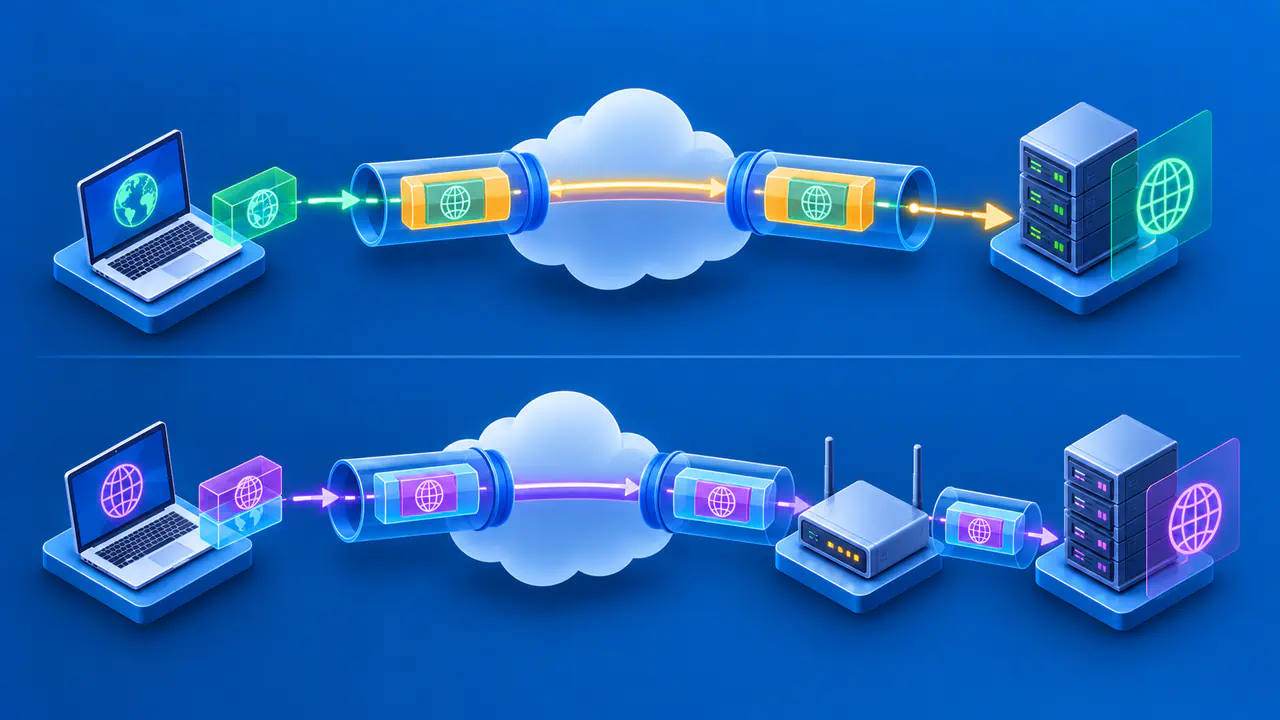
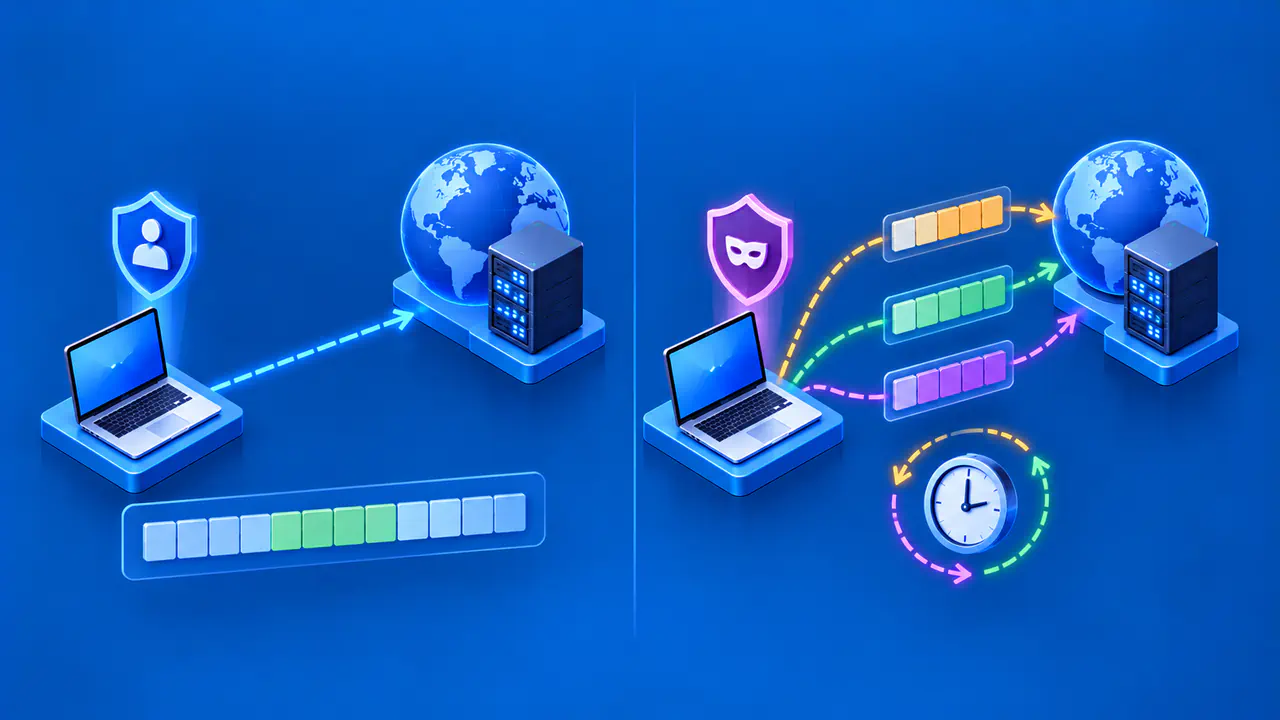
6to4 and Teredo are IPv6 transition mechanisms that carry IPv6 traffic across IPv4 networks. A 6to4 address belongs to 2002::/16, while a Teredo address belongs to 2001:0000::/32. Those prefixes help identify legacy tunnel configuration in an address list or network inventory.
An address or adapter entry alone does not establish that the tunnel works. It also does not demonstrate native IPv6 service on the underlying network. Each mechanism needs its own supported endpoints, routing, and packet handling.
Recognize the Address Structure
The two mechanisms encode different information in their IPv6 addresses. Read the prefix length together with the address, particularly when compressed notation hides zero-valued groups.
6to4 Starts with 2002
The first 16 bits identify 6to4. The next 32 bits encode an IPv4 address, producing a /48 site prefix. A further 16-bit subnet field and a 64-bit interface identifier complete the IPv6 address.
Consider the illustrative address 2002:c000:023d:5::20. Split the encoded IPv4 portion c000:023d into four hexadecimal bytes: c0, 00, 02, and 3d. Their decimal values are 192, 0, 2, and 61, giving 192.0.2.61. The resulting site prefix is 2002:c000:023d::/48, with subnet 5 in this example.
The embedded IPv4 address represents the 6to4 site's IPv4 endpoint. It is not necessarily an IPv4 address assigned to the individual IPv6 host behind that endpoint. Reading the field therefore does not identify a particular computer or account.
This example embeds an IPv4 documentation address to show the format. It is not a usable Internet tunnel configuration: actual basic 6to4 operation requires a suitable globally reachable IPv4 address.
Teredo Starts with 2001:0000
The Teredo prefix occupies 32 bits, so its first two fully expanded groups are 2001:0000. An address beginning with 2001 alone is insufficient evidence. For example, the documentation prefix 2001:db8::/32 is outside the Teredo allocation.
After the prefix, a Teredo address contains a 32-bit server IPv4 address, 16 bits of flags, a 16-bit obfuscated User Datagram Protocol (UDP) port, and a 32-bit obfuscated client IPv4 address. The decoded client fields identify the externally visible IPv4 address and UDP port. If a network address translation (NAT) device is present, it translates IPv4 addresses and may also translate ports.
For a hypothetical decoding exercise, use 2001:0000:c000:023d:00a2:efff:39cc:9bd2. Its fields yield:
- Server address: c000:023d decodes to 192.0.2.61.
- Flags: 00a2 is the flags field.
- Mapped UDP port: complementing the 16 bits of efff gives 1000 hexadecimal, or 4096 decimal.
- Mapped client address: complementing the 32 bits of 39cc:9bd2 gives c633:642d, which decodes to 198.51.100.45.
Here, complementing means flipping every bit within the specified field. It is a reversible encoding operation, with no secret key. Both decoded IPv4 addresses are documentation examples, so the result illustrates the structure without representing a working Teredo client or server.
Inspect an Adapter's Actual State
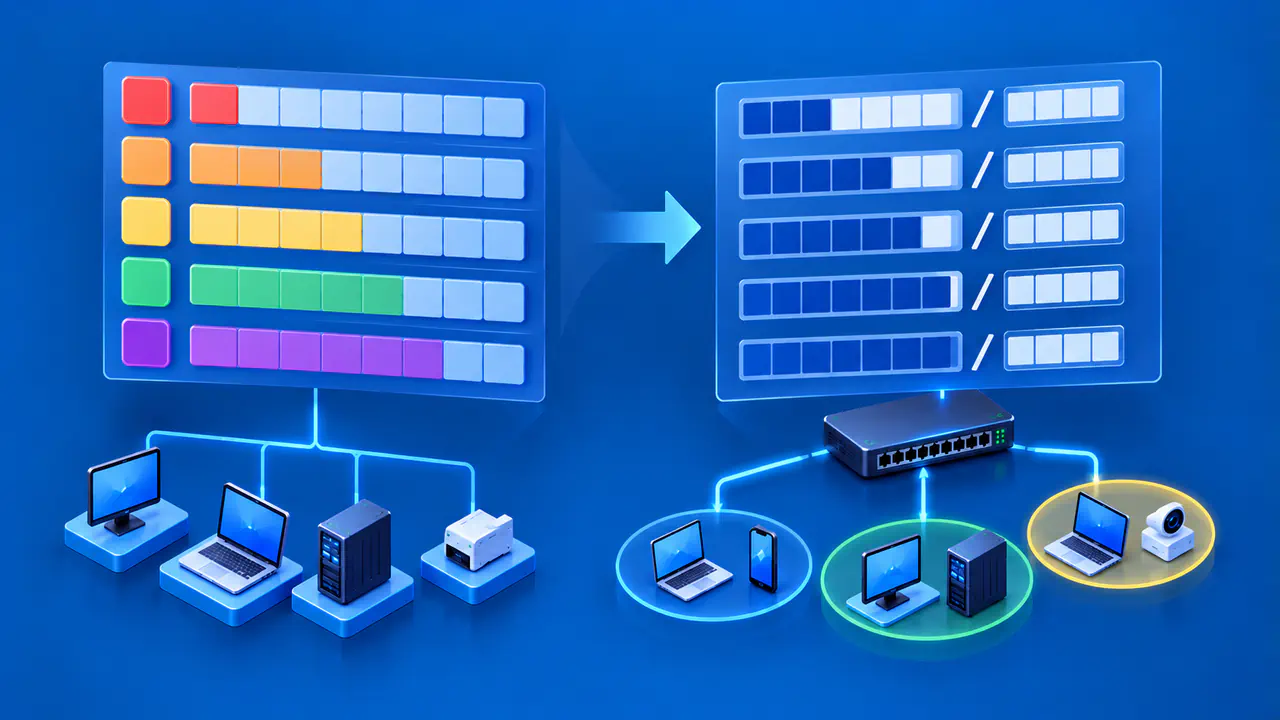
A tunnel interface may appear separately from an Ethernet or Wi-Fi interface. Names and presentation vary by operating system and version. Match an entry's addresses and mechanism-specific state instead of treating a familiar adapter name as proof of a functioning connection.
On Windows 11 or Windows Server 2025, these commands display IPv6 addresses and the respective tunnel states:
netsh interface ipv6 show addresses
netsh interface 6to4 show state
netsh interface teredo show state
The first command lists IPv6 addresses; the other two show the configuration and status of 6to4 and Teredo. These commands inspect the current settings without changing them.
An interface can exist without a usable route to the destination. A disabled tunnel or an unsupported tunnel command also says nothing by itself about whether native IPv6 works on the device.
Why These Mechanisms Were Deployed
Basic 6to4 connected IPv6 sites over IPv4 using addresses derived from their IPv4 endpoints. IPv6 traffic crosses the IPv4 portion through IP protocol 41 encapsulation. This number identifies an IP payload type; it is not a Transmission Control Protocol (TCP) or UDP port.
Teredo addressed a different obstacle: IPv6 communication by hosts behind IPv4 NAT. It carries IPv6 inside UDP over IPv4, allowing a suitable NAT mapping to transport the encapsulated traffic. The network still needs to permit that communication, and the implementation must support the relevant NAT behavior.
Neither mechanism adds IPv6 support to an IPv4-only application. Each provides a way to carry IPv6 traffic where the intervening network is IPv4. Application support, destination reachability, and the mechanism's operational requirements remain separate considerations.
Legacy Paths Have Several Points of Failure
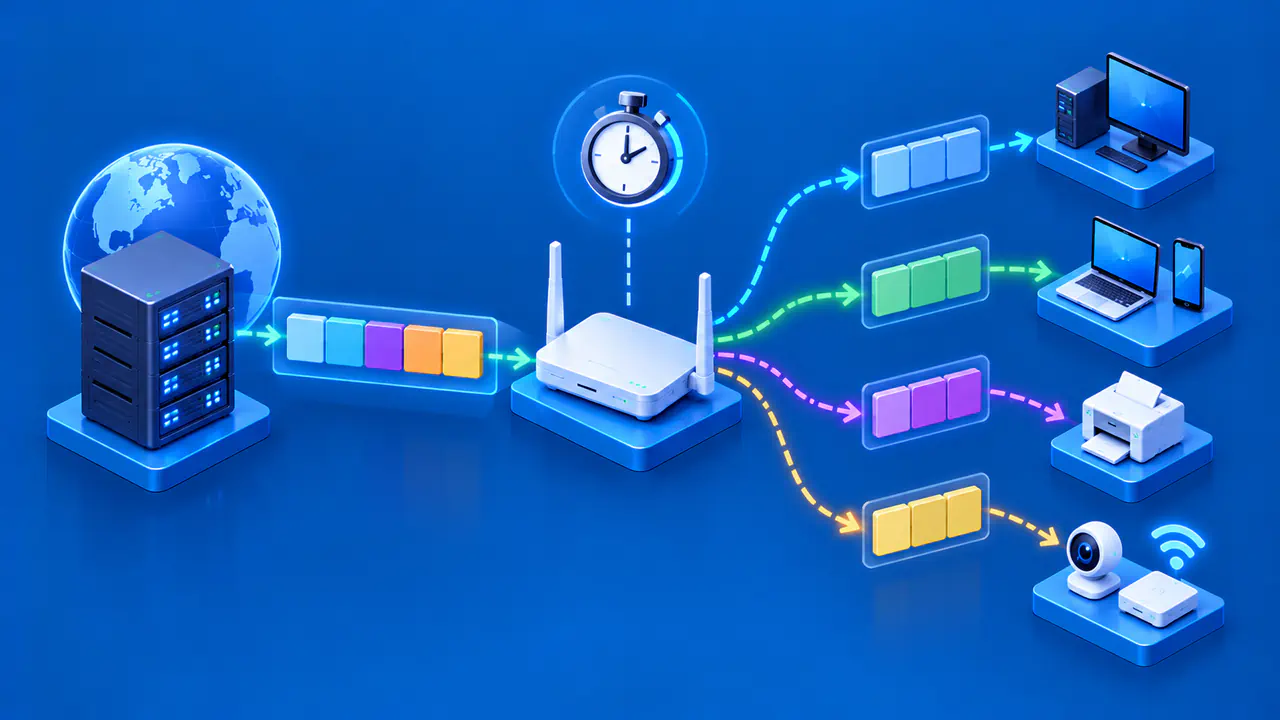
For 6to4 communication with native IPv6 destinations, relays forward traffic between the tunnel and the native IPv6 network. Traffic going out and coming back may use different relays. A reachable outward relay therefore provides only part of the required path.
Protocol 41 filtering can interrupt a 6to4 path while ordinary IPv4 traffic continues to pass. A route to a relay can also exist without a relay successfully forwarding the encapsulated packet. Checking only the local address or route entry misses those possibilities.
Private IPv4 addressing creates another limitation for basic 6to4. An endpoint cannot turn an ordinary private address behind NAT into a valid public 6to4 endpoint merely by embedding that address after 2002.
Teredo's UDP encapsulation has its own dependencies. NAT mappings, filtering behavior, and local tunnel policy affect whether traffic reaches the peer. An available adapter does not guarantee that every NAT arrangement or remote peer is compatible. When a connection fails, check the NAT, filtering, and tunnel settings before enabling another tunnel mechanism.
How Encapsulation Increases Packet Size
Assume a complete inner IPv6 packet of 1200 bytes, an outer IPv4 header of 20 bytes with no options, and no additional mechanism headers. Basic 6to4 produces a 1220-byte IPv4 packet. With the same inner packet and IPv4 header, Teredo adds an eight-byte UDP header, producing a 1228-byte enclosing packet.
Additional headers can make the enclosing packet larger than these examples. The extra headers reduce the space available for an IPv6 packet to cross the IPv4 path without fragmentation. A tunnel's maximum transmission unit (MTU) limits the size of the IPv6 packet it accepts. An oversized enclosing IPv4 packet may need fragmentation or trigger a packet-size error, so a successful small exchange does not prove that larger packets will pass.
Anycast 6to4 Relay Deprecation
The deprecated anycast 6to4 relay mechanism used the shared IPv4 address 192.88.99.1 to reach a relay. Both this relay mechanism and the associated 6to4 Provider Managed Tunnels design are deprecated. The anycast relay should not be offered as a general fallback for obtaining IPv6 connectivity.
Basic unicast 6to4 and the 2002::/16 IPv6 prefix are outside this deprecation. This distinction explains why the prefix can still appear in registries or existing configuration. It does not establish that a specific deployment has working relays or current support.
Teredo is a separate protocol. This 6to4 anycast deprecation does not deprecate Teredo as a whole. A Teredo implementation's support and suitability need to be assessed for its own platform and intended application.
Apply Policy to the Carried IPv6 Traffic
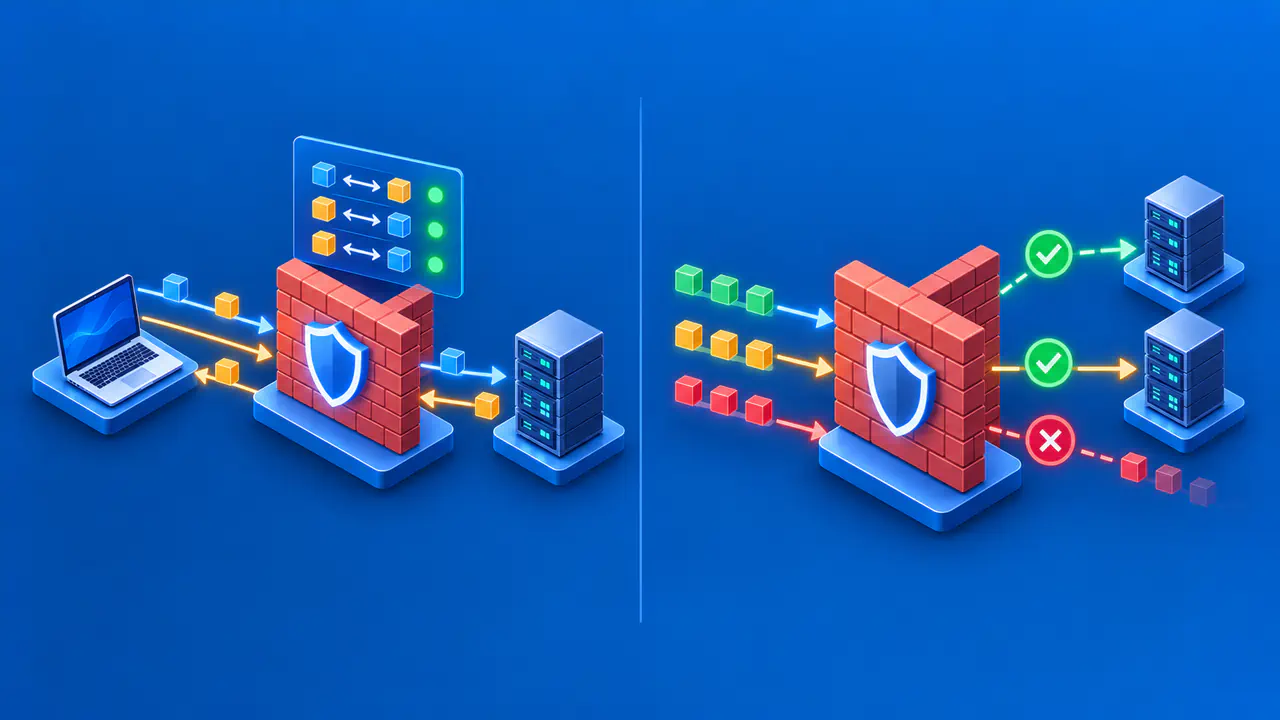
A security device that inspects only an outer IPv4 or UDP header can miss the IPv6 packet inside. Tunnel-aware processing or inspection after decapsulation determines whether the intended IPv6 traffic controls are applied.
Encapsulation and reversible address encoding do not provide encryption. A host behind NAT also needs appropriate policy for IPv6 traffic admitted through a tunnel. The traffic policy needs to cover the IPv6 packet exposed at decapsulation as well as the outer transport.
Use Supported IPv6 Connectivity
Prefer IPv6 service supplied and supported by the network provider or administrator. Where native service is available, identify its assigned addresses and route separately from legacy tunnel entries. A tunnel can also be appropriate when an operator explicitly supports its endpoints, routing, and packet handling for a defined purpose.
If a particular application requires Teredo, use that application's supported platform guidance and the network administrator's policy to assess it. An unexplained adapter name is insufficient reason to install an old driver, substitute a historical public relay, or change global IPv6 settings.
Before changing a tunnel configuration, check whether the tunnel serves only that device or acts as a gateway for other hosts. Changing a gateway's tunnel can affect an entire site's IPv6 addresses and routes.