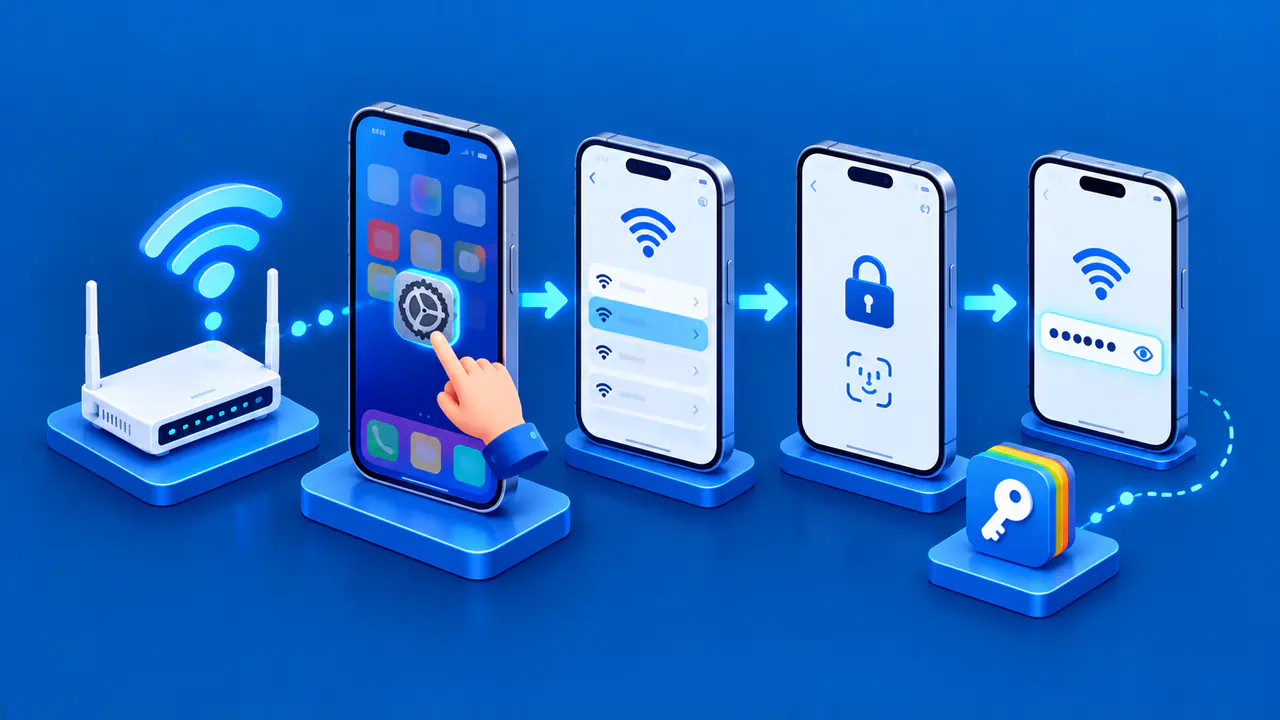
How to Find Your Wi-Fi Password on a Mac

A Mac can show or copy the password for a Wi-Fi network it has saved. On macOS Sequoia or later, the Passwords app displays saved Wi-Fi entries. On macOS Ventura or later, System Settings can copy the password of a known network. These methods show or copy a saved password; they cannot recover a password that is not stored on the Mac.
Check the network name before you begin. A household or office may have separate main, guest, and extender networks with similar names. The saved password belongs to the network you select, so make sure the other device is trying to join that same network.
Identify the Saved Network and macOS Version
To see your macOS version, choose the Apple menu > About This Mac. The window shows the operating system's name and version number. If your version does not include the Passwords app, use one of the other methods below.
If your Mac is connected to the intended Wi-Fi network, note its name from the Wi-Fi menu or System Settings. If you joined it previously but are now away from it, look in the saved or known networks list. You do not need to be near the network to view its saved password.
Use the Passwords App on macOS Sequoia or Later
- Open the Passwords app on your Mac.
- Authenticate with Touch ID or your Mac user account password if prompted.
- Click Wi-Fi in the sidebar. If the sidebar is hidden, click the Sidebar button.
- Select the saved network by its exact name. The currently connected network appears at the top when applicable.
- Move the pointer over the dots beside Password to reveal the characters. Click the dots to copy the password when you need to enter it elsewhere.
Use this view when you want to read the password without first pasting it into another app. Select the Wi-Fi category rather than a website account with a similar name.
Copy a Known Network Password in System Settings
- On macOS Ventura or later, choose the Apple menu > System Settings.
- Click Network in the sidebar, then click Wi-Fi.
- Scroll down and open Advanced to see the list of known networks.
- Click the More button next to the intended network and choose Copy Password.
- Complete any authentication prompt, then paste the password where you need it.
The Copy Password command puts the password on your Mac's clipboard. To read it, paste it into a text field that is not shared or sent anywhere, then remove the text when finished. On the Mac, press Command-V to paste the password.
You may also be able to paste directly into a Wi-Fi password prompt on another Apple device you own using Universal Clipboard. Both devices must support the feature, be nearby, be signed in to the same Apple Account, and have Wi-Fi, Bluetooth, and Handoff enabled. If Universal Clipboard is unavailable, read the password on the Mac and enter it manually on the other device.
Copy Password is unavailable for some networks. An open network has no shared Wi-Fi password, although a separate web sign-in may be required after joining. A work or school network may instead use individual credentials or a certificate; follow its administrator's connection instructions.
Use Keychain Access on Earlier macOS Versions
If your Mac runs a macOS version earlier than Ventura, Keychain Access can display a password stored in an accessible keychain. You must be able to unlock the relevant keychain and complete any authorization prompt. It does not bypass a locked keychain.
- Find Keychain Access in Spotlight and open it.
- Look for the saved network in a keychain such as login or System, with the Passwords category selected.
- Locate the intended network item and double-click it to open its details.
- Select Show password and enter the keychain password or administrator credentials requested by macOS, then click Allow.
If the keychain list is hidden, choose Window > Keychain Viewer. Check the item's name and type before revealing its password, since keychains also hold unrelated credentials. The login keychain password normally matches your Mac login password, but it can differ after a password reset; do not reset the keychain merely to inspect a network password, because resetting can remove saved passwords.
When the Network Is Missing or the Password Fails
Check whether you are looking at known networks rather than all nearby networks. A network detected by your Mac is not automatically saved. If the network is missing, check another device that has saved its password, or ask the network owner.
If a copied password is rejected, compare the network name on the receiving device with the saved name on your Mac. A saved password can be out of date if the network owner changed it. Check the current password with the network owner or administrator instead of repeatedly trying the old one.
Read the connection error before assuming that every failure means the password is wrong. A web login after joining Wi-Fi is separate from the network password. If the device is out of range or the network is unavailable, the correct password alone will not make it connect.
Handle the Clipboard Safely
A copied network password is sensitive even when it is temporarily on your Mac. Paste it only where you intend to use it. Avoid shared documents, public chat windows, screen recordings, and screenshots that include the characters. Afterward, replace the clipboard contents with harmless text and close any temporary field you used to inspect the password.
Lock your Mac when you leave it. If you believe a network password has been exposed, ask whoever manages that network to change it. Devices using the old password will need the new password to reconnect.