
Articles: Page 12
Browse all our articles to find answers to your questions about the internet, networks, browsers, security, privacy, and more. From everyday problems to more technical topics, our articles offer explanations and guidance for readers of all experience levels.

Stateful vs Stateless Firewalls Explained
Stateful firewalls track connections to recognize return traffic, while stateless firewalls check each packet against rules without that connection history.

IPv6 Address Types and Scopes Explained
IPv6 uses unicast for one interface, multicast for a group, and anycast for one of several interfaces, while scope limits where an address is used.

Legacy IPv6 Tunnels: 6to4 and Teredo
6to4 carries IPv6 inside IPv4 packets, while Teredo adds a User Datagram Protocol header to carry IPv6 through compatible IPv4 address translators.

How Happy Eyeballs Chooses IPv4 or IPv6
Happy Eyeballs tries IPv6 and IPv4 addresses with short delays between attempts, then uses the first connection to succeed without waiting for others to finish.

What Is a Dual Stack Network?
A dual stack network runs IPv4 and IPv6 together, with separate addresses and routes so applications can connect using either supported IP version.

Temporary vs Stable IPv6 Privacy Addresses
Stable privacy addresses retain an identifier within a network, while temporary IPv6 addresses rotate identifiers and can coexist for ongoing connections.

How IPv6 Prefix Delegation Works
IPv6 prefix delegation gives a router an address block that it can divide among local networks, with lifetimes limiting how long the block can be used.

Unicast vs Multicast vs Anycast
Unicast addresses one recipient, multicast delivers to a group, and anycast lets routing select one service location from several using the same address.
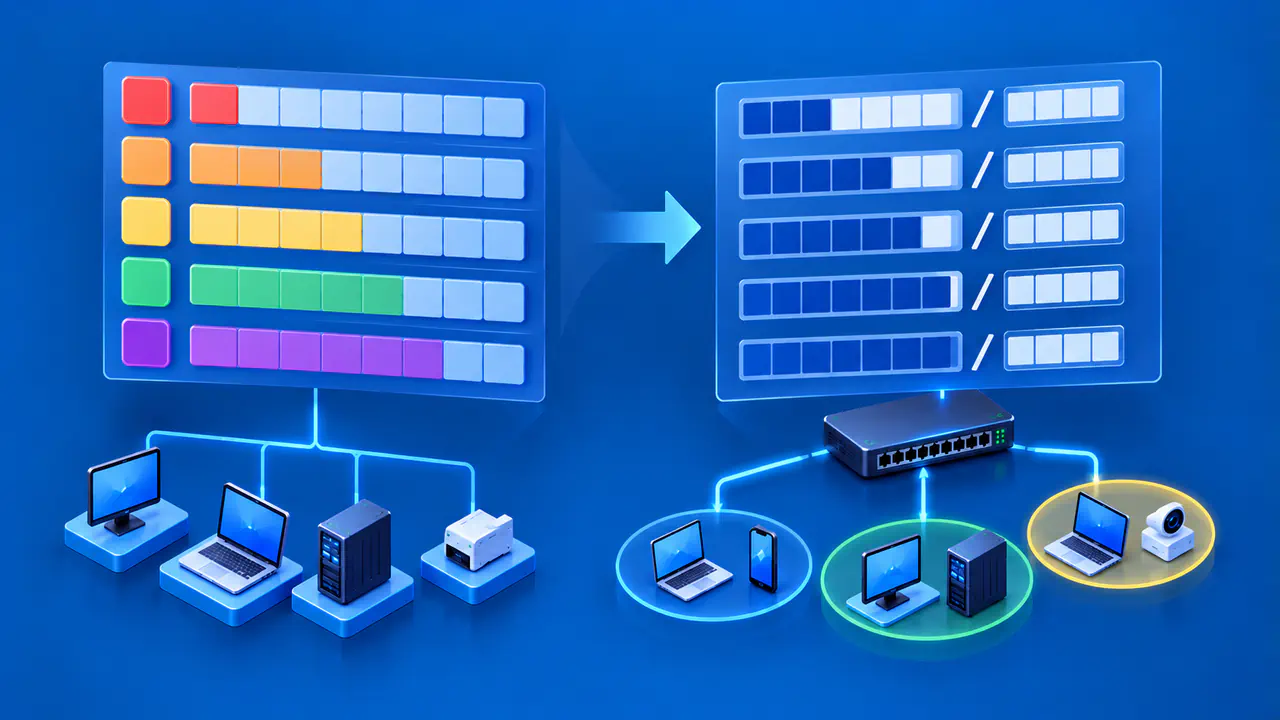
IPv4 Address Classes Explained
IPv4 address classes describe historical network boundaries, while explicit CIDR prefixes define the subnet masks and address ranges used in current networks.
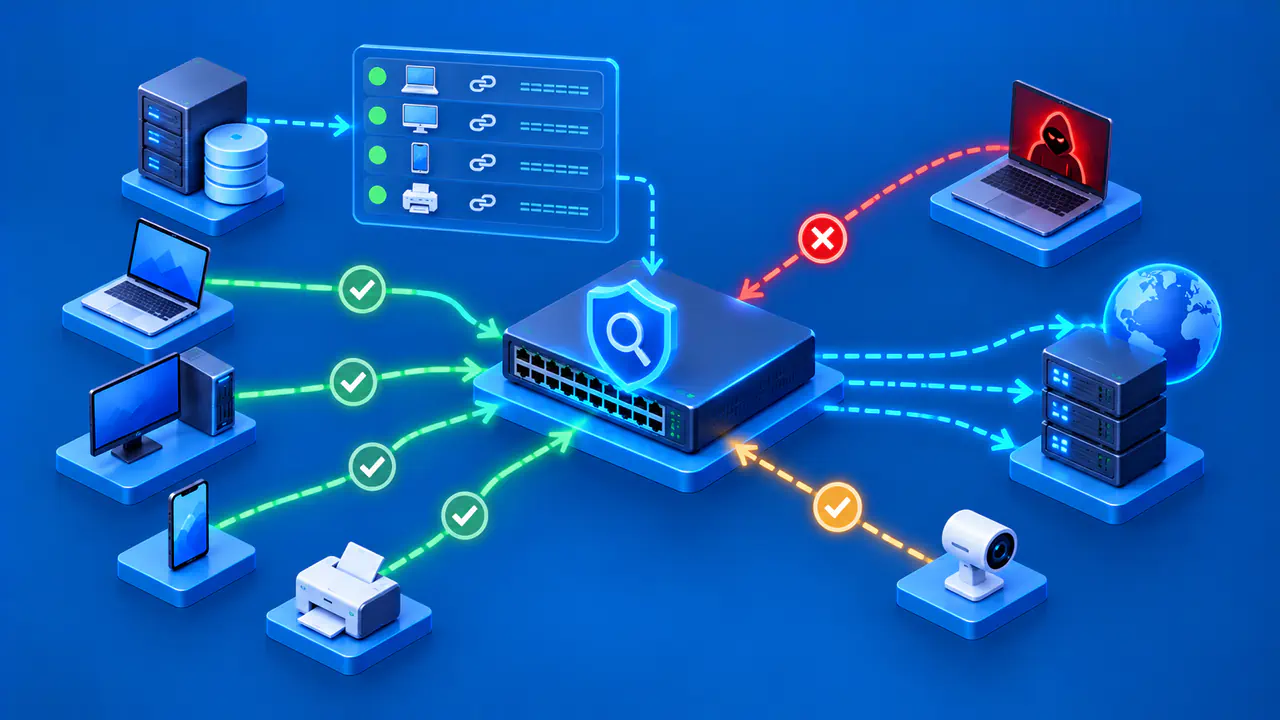
How Dynamic ARP Inspection Protects a LAN
Dynamic ARP Inspection checks IPv4 address claims against approved IP-to-MAC bindings, with explicit exceptions needed for manually addressed devices on a LAN.
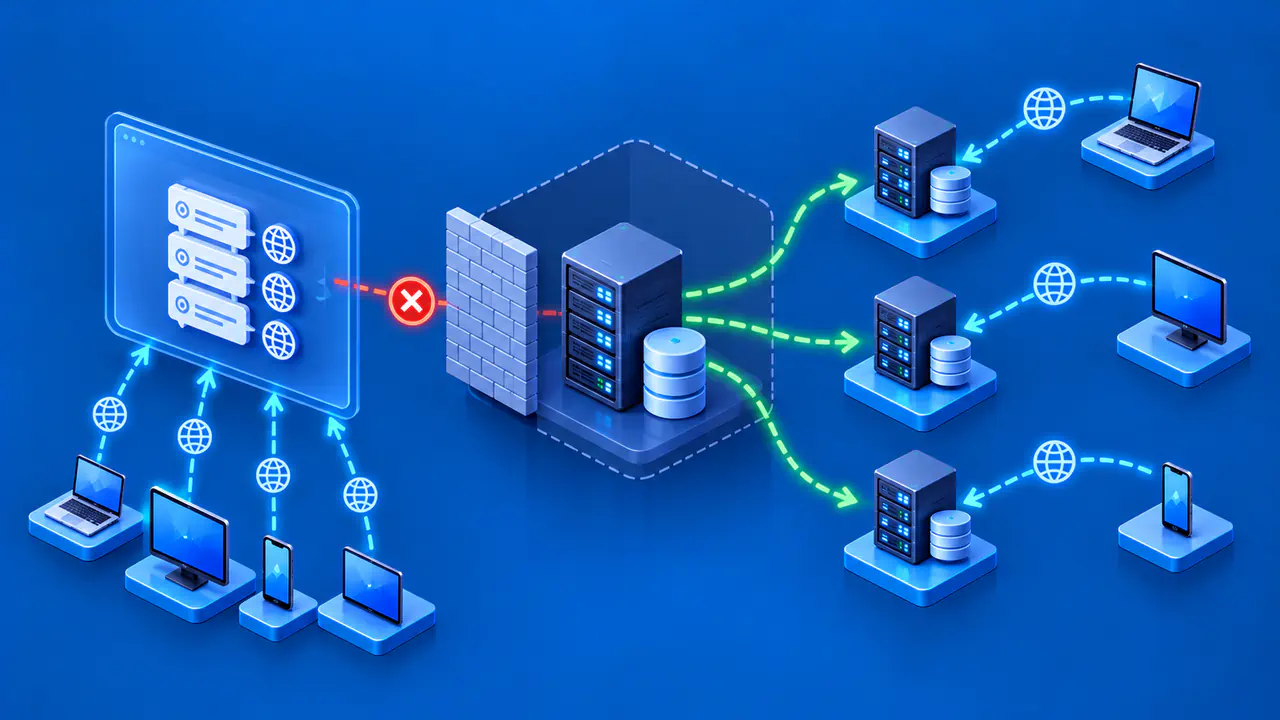
What Is a Hidden Primary DNS Server?
A hidden primary DNS server supplies zone updates to public secondary servers while staying out of the public nameserver list used to direct DNS queries.

How to Set Up Wi-Fi EAP-TLS with FreeRADIUS
Wi-Fi EAP-TLS setup in FreeRADIUS requires server and client certificates, an access policy, and a client profile that verifies the RADIUS server.

How ALPN Negotiates HTTP/2 and HTTP/3
ALPN selects a shared application protocol during a TLS handshake, choosing h2 for HTTP/2 over TCP or h3 for HTTP/3 within a QUIC handshake.

What Is NAT and How Does It Work?
NAT translates IP addresses as packets cross networks, often changing port numbers too so multiple devices can share a single external IP address.

How to Fix an IP Address Conflict
An IP address conflict is resolved by identifying duplicate local IPv4 assignments, correcting manual settings or reservations, and checking both devices.

What Is a DDoS Attack?
A DDoS attack uses traffic from multiple sources to try to exhaust network or computing resources and prevent legitimate users from accessing a service.

How to Access Your Home Network behind CGNAT
Tailscale can connect your devices to your home network behind CGNAT using outbound connections, without opening inbound ports on your home router.

2.4 GHz vs 5 GHz vs 6 GHz Wi-Fi
2.4 GHz Wi-Fi generally offers more reach, 5 GHz balances reach and capacity, and 6 GHz adds spectrum for compatible devices where regional rules allow it.

How to Set Up an Isolated Guest Wi-Fi Network
An isolated guest Wi-Fi network uses a separate name and password, blocks access to your main network, and can keep guests from reaching each other's devices.
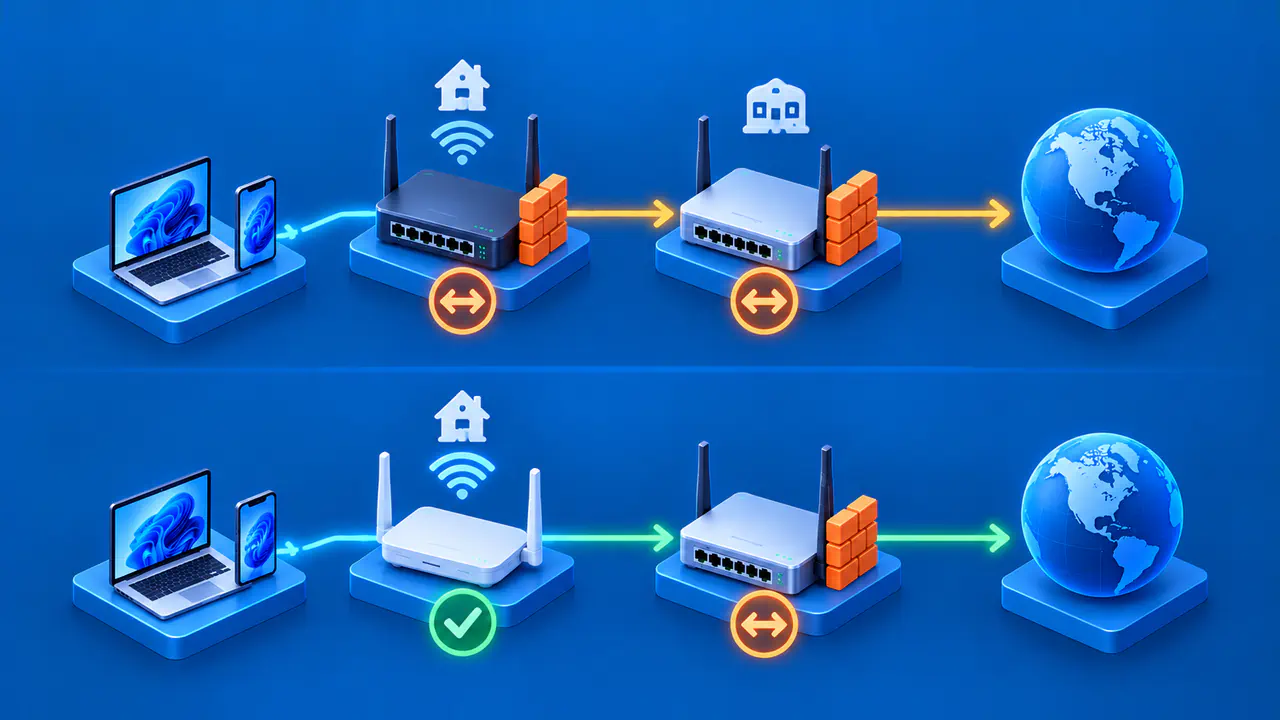
What Is Double NAT and How Do You Fix It?
Double NAT means two routers translate the same IPv4 traffic, and bridge or access point mode on one router can remove an extra NAT layer at home.

What Is Dynamic DNS and How Does It Work?
Dynamic DNS updates a hostname's address records when a public IP changes, so later lookups can return the new address without changing the name.

DNS Resolver Amplification Protection
Restricting DNS recursion to authorized clients, filtering forged source addresses, and setting traffic limits help prevent resolver amplification abuse.

How EDNS Client Subnet Affects DNS and Privacy
EDNS Client Subnet shares a client network prefix to tailor DNS answers, but can expose network details and reduce the reuse of cached responses.

What Is Anycast DNS?
Anycast DNS advertises the same service address from multiple sites, allowing network routing to send each query to one reachable node based on current paths.